
How to Search Wake County Warrants
There is no confirmed official Wake County active warrant list open to the public. The Sheriff's inmate inquiry portal may show some warrant or custody data, but it is not a full warrant database. The most reliable way to check is the North Carolina eCourts Portal. Search the case by name, and look for a called-and-failed entry or an order for arrest in the docket. For anything urgent, call the Wake criminal clerk line.
Do not pay an unofficial warrant-search website. Those sites are not the court and cannot resolve anything.
- Open the eCourts Portal and run Smart Search by name.
- Select Wake County, which is District 10.
- Open the case and read the docket for an order for arrest.
- Call the traffic or felony clerk line at (919) 792-4300 to confirm.
- If represented, contact your attorney before you act.
Note: A warrant listing can be stale, so always confirm with the court or Sheriff before acting on what a search shows.
Types of Warrants in Wake County
Warrant is a broad word, and North Carolina uses several specific terms. Each one comes from a different stage of a case. Knowing which one applies tells you who issued it and what resolves it.
- Arrest warrant - issued on probable cause to arrest a person.
- Order for arrest - often issued after a failure to appear or a court violation.
- Search warrant - authorizes a search; access may be delayed or sealed during an investigation.
- Probation violation order - tied to a supervision breach.
- Fugitive or extradition warrant - for out-of-county or out-of-state matters.
Civil process is different. A magistrate summons, a writ, a show-cause order, or a contempt order is not a criminal arrest warrant, though some civil contempt can lead to custody.
Who Issues and Serves Wake County Warrants
Three offices share the work. In criminal matters, clerks of court issue arrest and search warrants, and District Court magistrates also issue warrants for arrest and set bail. The magistrate is a key player in Wake because so much initial criminal process runs through that office. Once a warrant or order exists, the Sheriff's Office serves it and takes custody. The court then keeps the case file that records what happened.
That split explains why a warrant question can bounce between offices. The clerk or magistrate can speak to issuance and the case, while the Sheriff handles service and custody. Knowing who does what saves time and points you to the right phone line.
What a Wake County Warrant Record Shows
When a warrant or order for arrest is public, the court record carries a familiar set of fields. Sealed and juvenile matters are the main exceptions. The table below lists the fields you can expect on a public warrant-related record.
| Field | What It Shows |
|---|---|
| Name / Defendant | The named person, where the matter is public and not sealed. |
| Case Number | The court case the order belongs to. |
| Charge / Offense | The statute or description behind the order. |
| Issuing Authority | The magistrate, clerk, or judge who issued it. |
| Bond Amount / Type | Set by the magistrate or judge where it applies. |
| Status | Active, served, recalled, quashed, disposed, or sealed. |
Status matters most. An order that reads recalled or quashed is no longer active.
Wake County Warrant Search Fields
If the Sheriff's inmate inquiry portal exposes warrant or custody data, it works like other name-based search tools. The exact field labels could not be confirmed because the official portal blocked automated access, so verify them in a browser. The fields below are the common ones for this kind of search.
| Field Label | Type | Required | Notes / Format |
|---|---|---|---|
| Last Name | Text | Likely primary | Try spelling variations and fewer characters. |
| First Name | Text | No | Narrows common last names. |
| Date Range | Date | No | Issue or served date, if the portal offers it. |
| Agency | Dropdown | No | Wake Sheriff or municipal agencies, if shown. |
| Search | Button | Yes | Submits the query. |
Note: For court warrant events, the eCourts Portal case search is the dependable source when the Sheriff portal is unavailable.
Called and Failed and Orders for Arrest
A very common Wake warrant situation starts with a missed court date. When a defendant does not appear, the docket can show a called-and-failed entry, and the court can issue an order for arrest. This is a routine but serious event. In a traffic or infraction case, it can also trigger driver-license consequences through the DMV.
Wake has a specific local form for this. Form WAKE-CR-01 is a motion and order to strike called-and-failed, recall an order for arrest, and reset a case on a trial calendar. An attorney can use it to clean up a missed date and get the case back on track. Acting quickly limits the fallout.
Bond on Wake County Warrants
When a person is arrested on a warrant or order, a magistrate or judge sets release conditions. Bond can be secured, requiring money, property, or a surety before release. It can be unsecured, where the amount is owed only if conditions are broken. It can also be a written promise to appear. The order and the charge drive what the magistrate sets. A jail record may show a public bond figure, but the court or magistrate order controls, so verify the current condition with the clerk or jail.
Sealed and Confidential Warrants
Some warrants are not public. A search warrant can be sealed during an active investigation and will not appear like an arrest warrant. A sealed indictment may stay hidden until arrest and court processing. Juvenile warrants and process are generally not public at all. These limits exist to protect investigations and young people, and they mean a public search can come up empty even when an order exists.
How to Resolve an Outstanding Wake Warrant
The safe approach is built on official contacts, not online shortcuts. Start with the case record, confirm the order with the clerk, and get legal help. If directed to appear, go to the Wake County Justice Center on Salisbury Street with ID and enough time for security screening.
- Search the Portal for the case and any order-for-arrest activity.
- Call the Wake criminal clerk line at (919) 792-4300.
- Contact counsel; an attorney may file a motion to recall and reset.
- Appear as directed at the Justice Center, 300 S. Salisbury St.
- Expect bond review and confirm any driver-license consequences afterward.
Do not ignore an order or assume it can be cleared online only. Contact the Clerk, the Sheriff, or counsel, and appear when told to.
After the matter is resolved, check the Portal and court record to confirm the update. An order should move from active to recalled, quashed, or served. For a traffic case, verify that any driver-license hold has been lifted, because a court fix and a DMV fix do not always happen at the same time. Keeping copies of the recall order and any receipt protects you if a stale entry resurfaces later.
Warrant Cautions Before You Act
A few warnings keep people out of trouble. A warrant listing can be out of date, so an order may already be recalled or served by the time you see it. The word "civil warrant" confuses many searchers, but in North Carolina, civil process, magistrate summonses, writs, and contempt orders are not the same as a criminal arrest warrant. Failure to appear on a traffic or infraction case can create both court and DMV consequences that run separately from any criminal bond.
Note: Never rely on an unofficial warrant database to decide what to do; confirm any order with the Wake Clerk or Sheriff before you act.
Expunction After a Dismissed or Recalled Charge
If a charge tied to a warrant is dismissed or ends in a not-guilty result, the record may be eligible for expunction. N.C.G.S. § 15A-146 covers expunction of dismissed charges and not-guilty findings, and some of those petitions carry no fee. After an expunction, access to the records is tightly controlled by statute.
Dismissed-charge expunction is governed by N.C.G.S. § 15A-146.
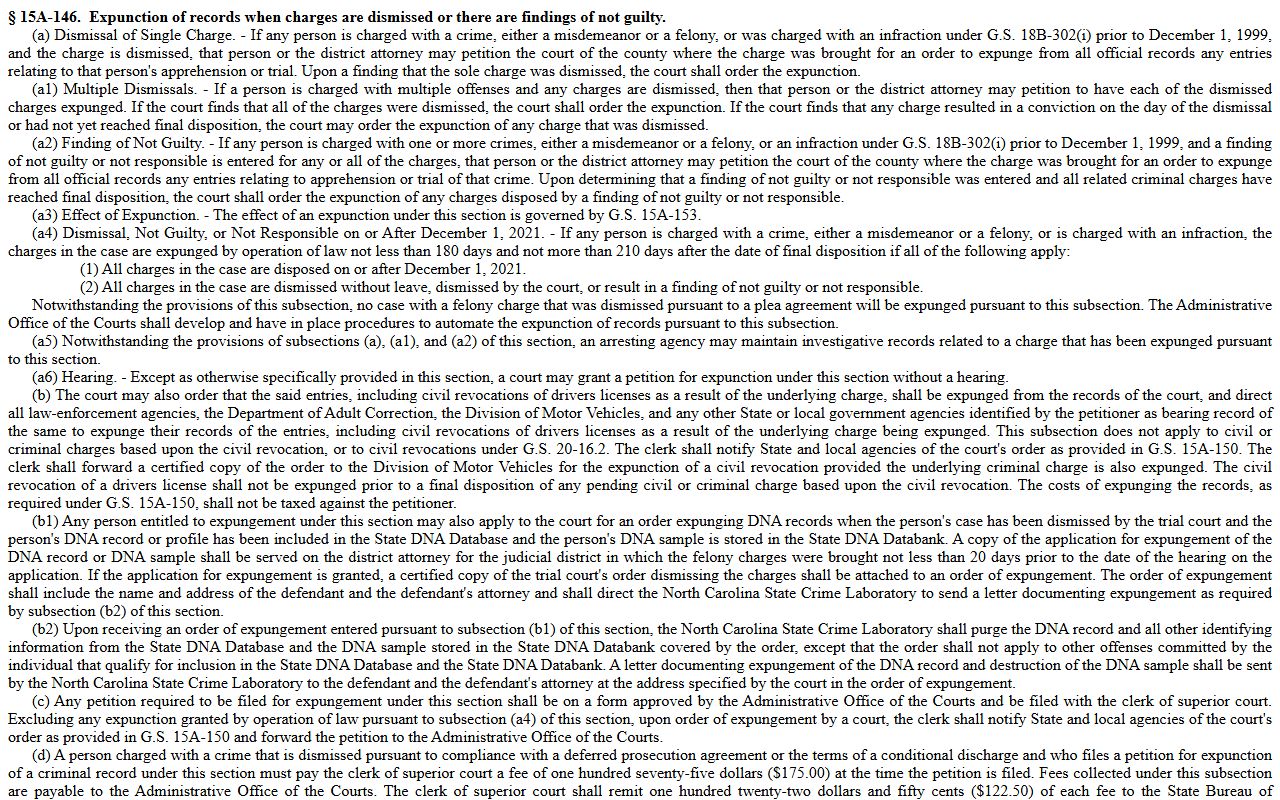
This statute is the path for clearing charges that did not end in conviction.
Access to expunged records after an order is limited under N.C.G.S. § 15A-151.
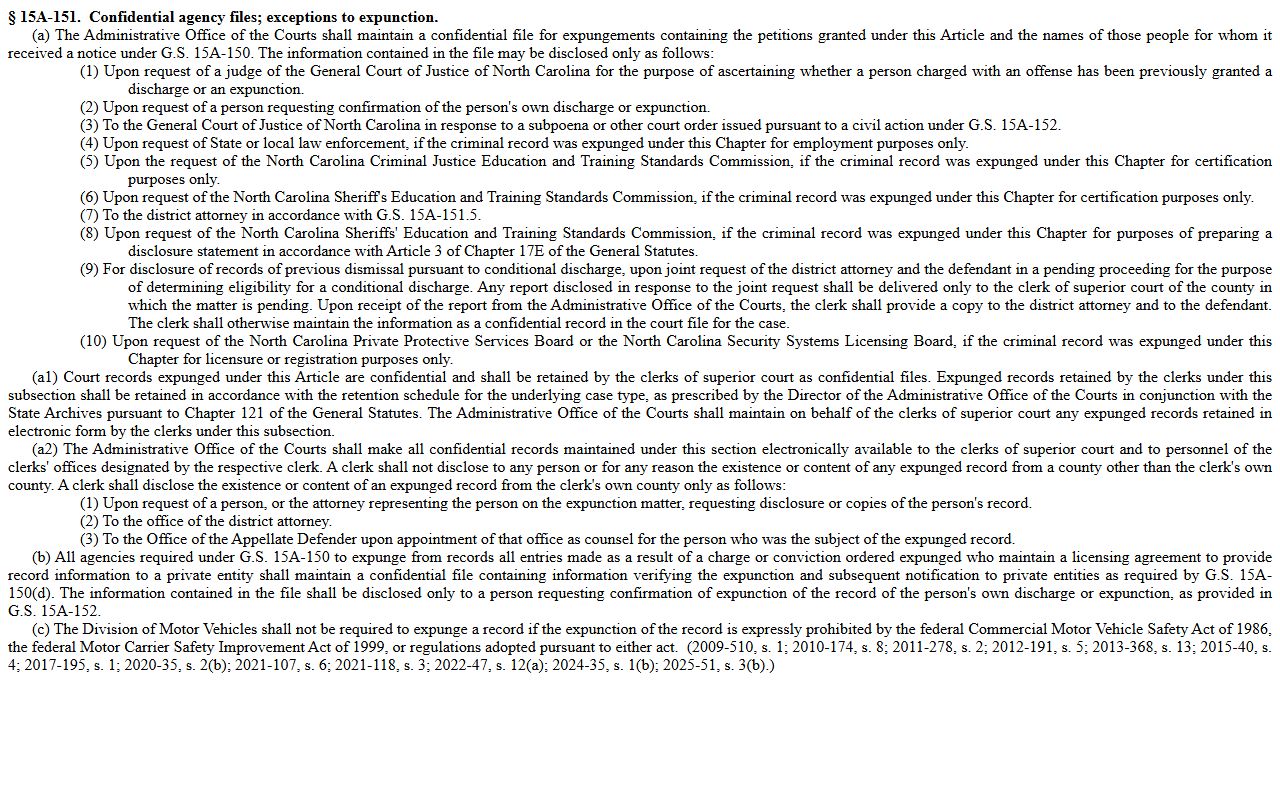
The statute names the narrow set of entities that may still reach an expunged record.
District Attorney and Public Defender
Warrants land in the hands of the prosecutor and, often, a defense lawyer. The District Attorney for Prosecutorial District 10 covers all of Wake County and prepares the criminal docket. A person who cannot afford counsel can seek a court-appointed lawyer or the Wake County Public Defender.
The Prosecutorial District 10 District Attorney office handles Wake prosecutions.
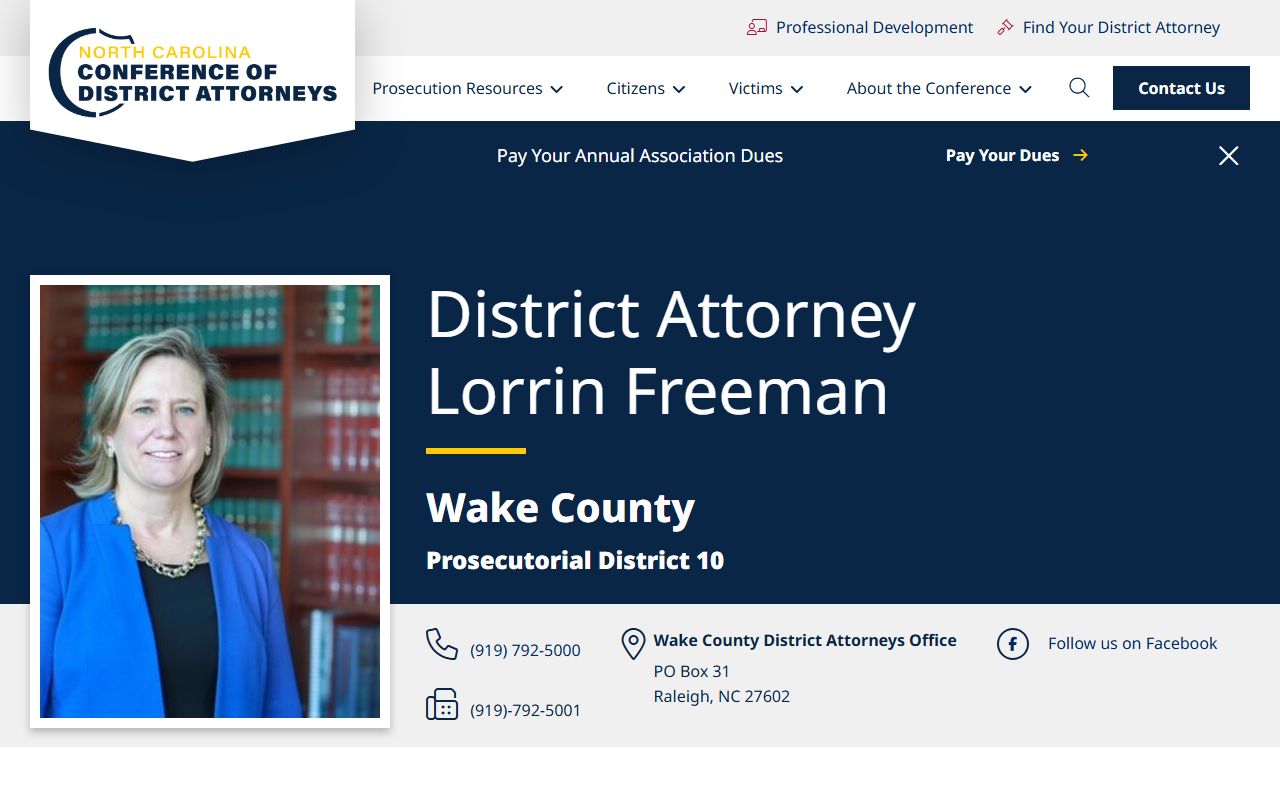
The office prepares the criminal trial docket and represents the State.
Eligible defendants can turn to the Wake County Public Defender for representation.
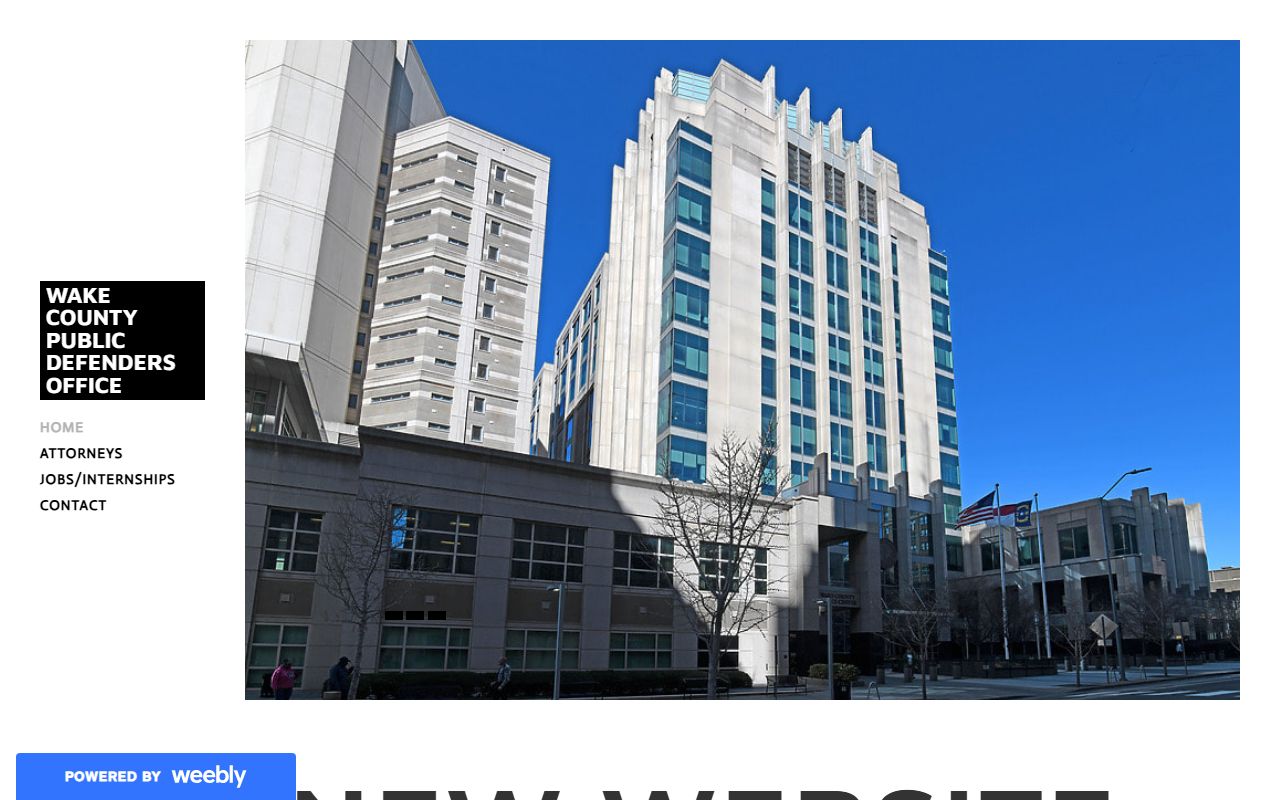
The Public Defender represents indigent defendants when the right to counsel applies.