
How to Look Up Wake County Jail Population Data
Official jail population data for Wake County comes from the Sheriff's Office and county budget records, not from a single public dashboard. The Sheriff runs the detention facilities and reports operational data, while the county budget covers detention staffing, costs, and capital projects. For national and state context, the federal Bureau of Justice Statistics publishes annual jail data. Where current official Wake capacity and average daily population figures are not posted, this page explains how to read the data rather than guessing at numbers.
This section surfaces where the data lives. It is not a name-search tool; to look up one person, use the inmate roster instead.
- Wake Sheriff transparency and detention pages for operational data.
- Wake County adopted budget for detention staffing and costs.
- Board of Commissioners materials for jail contracts and projects.
- Bureau of Justice Statistics for state and national context.
Wake County Jail Capacity Overview
Wake County operates two main detention facilities under the Sheriff's Office. Capacity is the number of beds approved for detention use, and it sets the baseline for any overcrowding or below-capacity discussion. Official rated-capacity figures were not published in the county pages reviewed, so the table marks them as not listed rather than estimating. Confirm current numbers with the Sheriff's annual report or the county budget.
| Facility | Location | Rated Capacity |
|---|---|---|
| John H. Baker Jr. Public Safety Center | 330 S. Salisbury St., Raleigh | Not listed in official pages reviewed |
| Wake County Detention Center | 3301 Hammond Road, Raleigh | Not listed in official pages reviewed |
Note: A capacity number alone does not explain conditions, since staffing, medical isolation, and classification needs can reduce usable beds.
Average Daily Population
Average daily population, or ADP, is the average number of people held per day over a period. It is more useful than a single-day count because one day can be unusually high or low. Bookings, length of stay, and release timing all move the ADP. A jail can have a stable ADP while still straining intake if bookings spike. Current official Wake ADP figures were not located in the pages reviewed, so cite the Sheriff or county budget when you need an exact number.
When you do find a figure, check the date and the source. An ADP from a budget document is a different thing from a one-day roster count, and mixing the two leads to bad comparisons.
Reading Wake County Population Metrics
Jail data uses a handful of terms that are easy to confuse. Knowing what each one measures keeps you from drawing the wrong conclusion from a headline number. The table below defines the core metrics.
| Metric | What It Measures |
|---|---|
| Rated Capacity | Beds approved for detention use. |
| Average Daily Population | Average people held per day over a period. |
| Admissions / Bookings | Jail entries during a period. |
| Length of Stay | Average or median days in custody. |
| Holds / Detainers | People held for another agency. |
Staff vacancies can also reduce usable capacity even when beds physically exist.
Pretrial Versus Sentenced Population
County jails are short-term local facilities, not state prisons. They hold newly arrested people, pretrial defendants awaiting trial, probation violators, and people serving short sentences. Because of that role, a county jail population usually skews heavily pretrial. The split between pretrial and sentenced detainees matters because the two groups respond to different policy levers, like bond practices versus sentencing.
| Group | Who They Are | Main Policy Lever |
|---|---|---|
| Pretrial | Held before case disposition | Bond and case processing speed |
| Sentenced | Serving a jail sentence | Sentencing and program options |
| Holds / Detainers | Held for another agency | Transfer and release timing |
Exact Wake pretrial and sentenced shares should come from official Sheriff or county reporting.
Misdemeanor Versus Felony Population
The charge level shapes who sits in the jail and for how long. Felony defendants may be held pretrial in the county jail even though Superior Court will ultimately hear the case. Misdemeanor defendants more often cycle through quickly, with shorter stays or release on lighter conditions. The mix of charge levels affects length of stay, which in turn drives the population. Without official Wake breakdowns, the safe approach is to describe the pattern and point readers to Sheriff and court data for specifics.
Mental Health and Medical Population
A share of any jail population needs medical or mental health care, and that caseload affects staffing and cost. Detailed health classification is not public at the individual level, and it should not be, since medical information is protected. At the aggregate level, the size of the medical and mental health caseload can shape housing decisions, isolation needs, and the budget. Wake's specific figures, where reported, would appear in Sheriff or county budget documents rather than in a public roster.
National and State Context
When local numbers are thin, national and state context helps frame the picture. The Bureau of Justice Statistics publishes annual Jail Inmates reports with national figures and incarceration rates per 100,000 residents. The Vera Institute publishes county-level historical estimates, and the Prison Policy Initiative offers state-level context. These are useful for comparison, but only the Sheriff and county figures are official Wake counts. The table below shows how a rate comparison is framed; the Wake row stays blank until an official county figure is available.
| Level | Source | Rate per 100,000 |
|---|---|---|
| Wake County | Sheriff / county report | Use official figure when available |
| North Carolina | BJS / state data | Context only |
| National | BJS Jail Inmates report | Context only |
Label any BJS, Vera, or Prison Policy figure as context, not as a Wake-certified count.
Holds, Detainers, and Transfers
Not everyone in the Wake jail is there only on a Wake charge. Some people are held for another agency under a hold or detainer, which can include another county, the state, or a federal agency. Those holds affect both release timing and local capacity, because a person cannot be released while a valid detainer is in place. A transfer can also move someone out of the county count and into state prison or federal custody.
This matters for reading the data. A bed occupied by a detainer case is still a used bed, even though the underlying matter may not be a Wake prosecution. Official Sheriff reporting is the place to confirm how many beds sit under holds at a given time.
Why Capacity Is Not the Whole Story
A rated-capacity figure looks simple, but it rarely reflects the beds a jail can actually use on a given day. Staffing shortages, medical isolation, classification separation, women's housing limits, protective custody, and maintenance closures can all pull usable beds below the rated number. That is why a jail can report space on paper and still feel full in practice.
The most honest public read combines several figures: rated capacity, average daily population, bookings, and length of stay, each with its source and date. A jail near or over capacity raises different questions than one well below it, and the answer drives decisions about staffing, diversion, and bond practices.
Population Trends Over Time
A trend line tells you more than a single number. Jail populations dropped across the country around 2020 and then varied by place, so it is wrong to assume a Wake trend without official Wake numbers. To build a defensible trend, pull ADP from several years of county budgets or Sheriff reports and keep the source and date for each point. A rising booking count with a flat ADP, for example, points to shorter stays, not a bigger jail. Read the shape of the data, not just the latest figure.
The Sex Offender Registry as Public Data
One related public dataset for Wake County is the North Carolina sex offender registry, maintained by the State Bureau of Investigation. It is separate from jail population data, but it is another official, searchable public-safety record tied to county addresses. The SBI gathers information from sheriffs and court documents and publishes certain fields online, with an acceptable-use screen before searching.
The SBI sex offender registry service page describes the program.
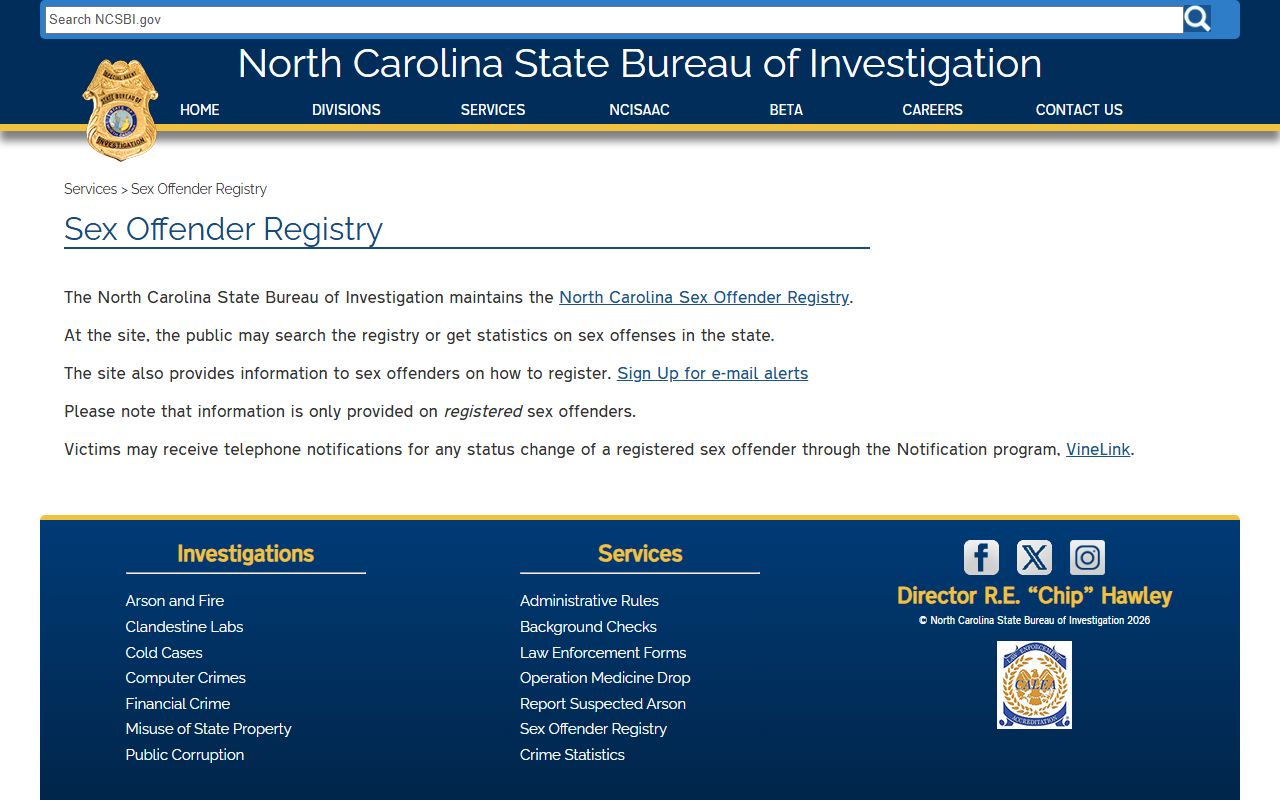
The service page explains how the registry is built and what the public may search.
The registry FAQ covers alerts and what data is shown.
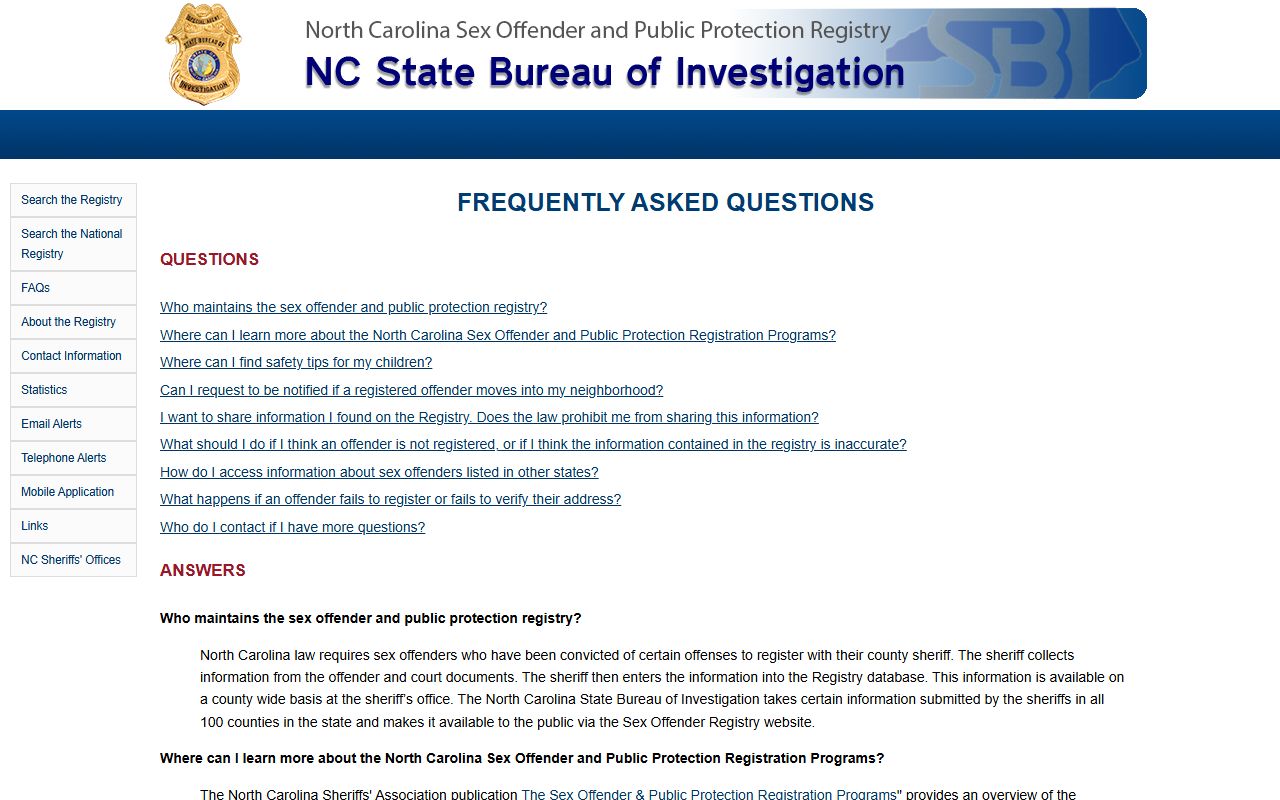
The FAQ notes the email alert option when an offender reports a move near a registered address.
A use disclaimer appears first on the registry disclaimer page.
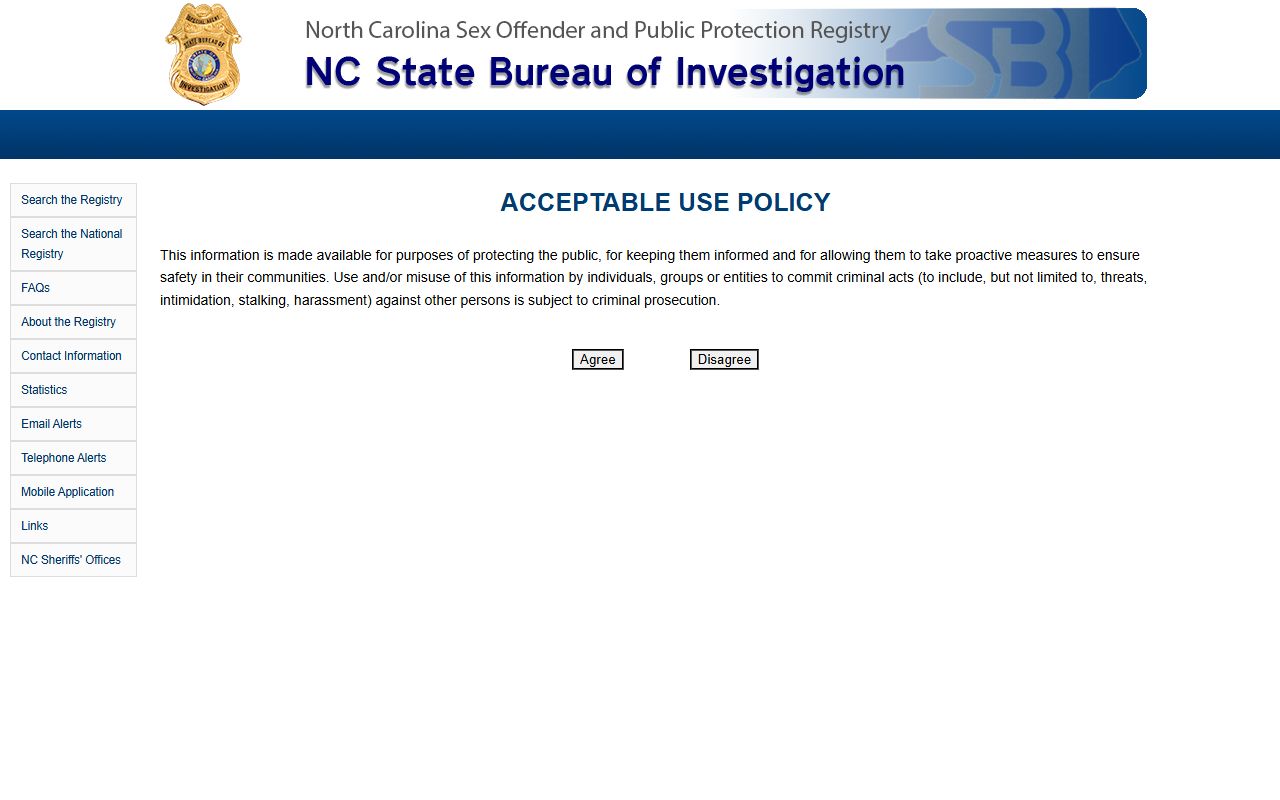
Misusing registry data to harass or threaten can be prosecuted under state law.
Searching for Wake County Inmate Records by Name
This page covers population data, not individual lookups. To find one person in custody, use the jail roster on the Wake County inmate records page, and for release tracking see the released inmates page. Population data answers how many and who in aggregate; the roster answers where one named person is right now.
Where the Data Comes From
Population figures are only as good as their source. The most defensible Wake numbers come from the Sheriff's Office and the county's adopted budget, including detention staffing, bookings, and capital projects. State jail inspection records and any DAC misdemeanant confinement reports add detail if Wake houses state-sentenced misdemeanants. National context comes from the Bureau of Justice Statistics. When you cite a figure, name the source and the date, and keep official county counts separate from outside context. Third-party aggregator sites sometimes publish a single capacity or population number with no clear source, and those should not be treated as official. If a number cannot be traced to the Sheriff, the county, or a federal report, it does not belong in a serious read of Wake jail data.