
How to File a Wake County Public Records Request
A public records request goes to the office that owns the record. For county documents, Wake County's Communications Office handles public records requests. For court case files, you use the eCourts Portal and the Clerk instead. For administrative Judicial Branch records, there is a separate request form. Identify the custodian first, then describe the record clearly enough to find it.
The Wake County public records requests page is the channel for county documents.
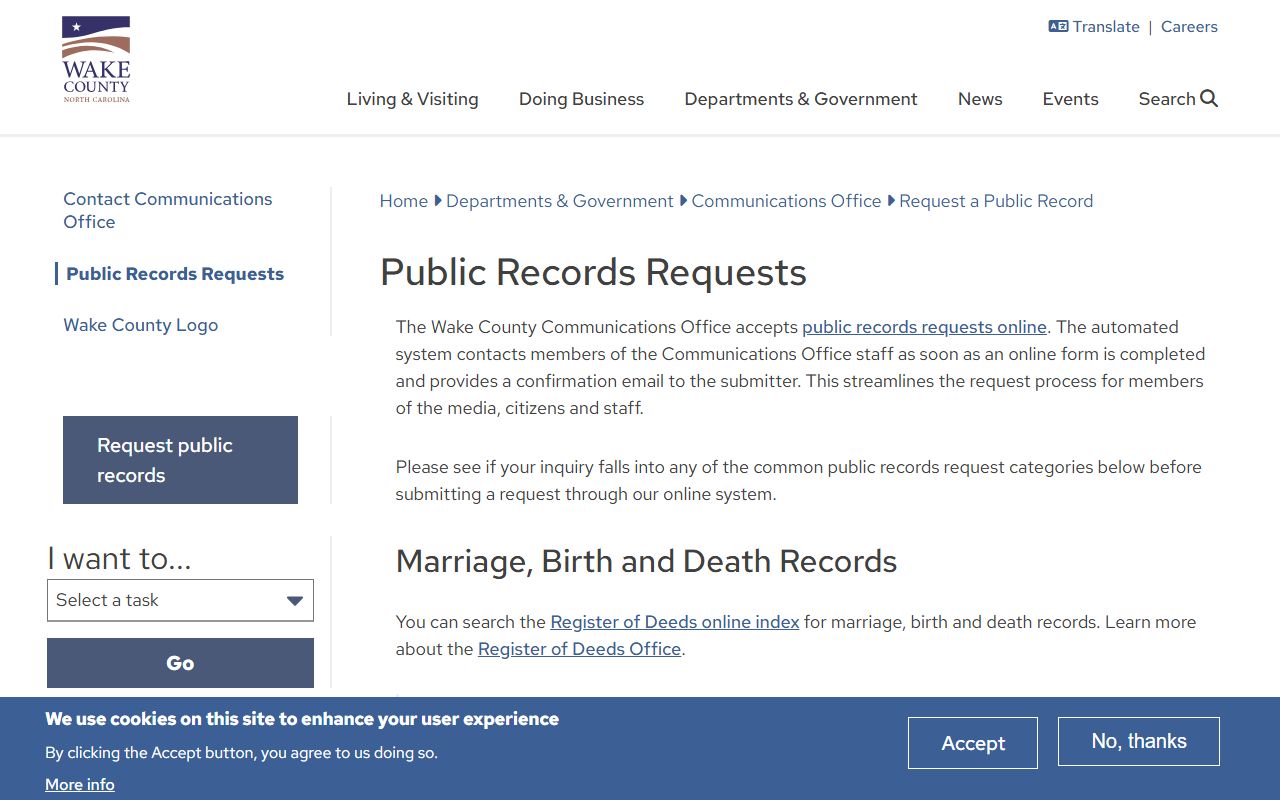
The county page routes requests to the department that holds the record.
- Decide which office holds the record you want.
- Describe the record with enough detail to locate it.
- Submit the request to that office or use its online form.
- Pay any allowed copy or special-service fee.
- Follow up if the response is delayed or denied.
Note: An agency must allow inspection at reasonable times, but it is not required to create a record that does not already exist.
North Carolina Public Records Law
The state public records law is Chapter 132 of the General Statutes. Under N.C.G.S. § 132-1, public records are documents and materials made or received by a public agency in the course of public business, in any format. The law gives any person the right to inspect, examine, and copy public records, and it covers county and state agencies unless another law creates an exception. This broad definition is the legal foundation for most Wake records access.
The definition lives in N.C.G.S. § 132-1.
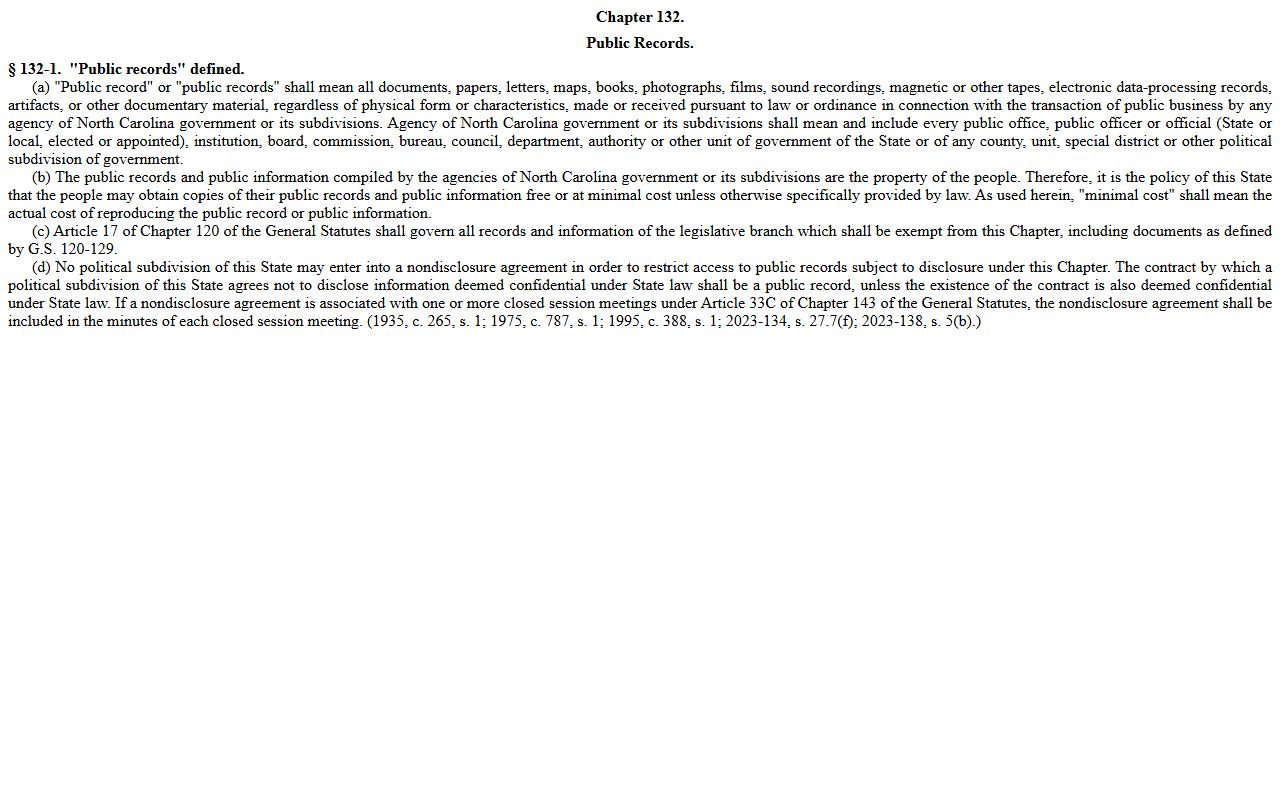
The statute defines public records broadly across formats and agencies.
The law reaches paper and electronic documents, emails, maps, books, photographs, sound recordings, and data-processing records. Inspection must be allowed at reasonable times, and copies furnished as promptly as possible, though an agency need not open outside normal business hours. Court records carry extra layers on top of Chapter 132, including confidentiality statutes and eCourts policies. Even when the Portal shows a case online, the Clerk of Superior Court stays the official custodian for the court file and certified copies.
Court Records Versus County Records
This is the distinction that decides where your request goes. A court case file is handled by the Clerk of Superior Court and the eCourts Portal, not by a broad public records request. County documents that are not court files, like budgets or department records, go to the county office that owns them. The Judicial Branch even says county or city documents should be requested from that county or city office, not from the courts.
Prisoner records for people in state custody are not held by the Wake Clerk; those go to the Department of Adult Correction. For court files specifically, start at the Wake County court records page.
A few quick examples show how the routing works. Powers of attorney are Register of Deeds records, not court records. A divorce judgment is a court record, while a marriage certificate is a vital record at the Register of Deeds. A jail booking is a Sheriff record, while the criminal case is a court record. The table below maps common needs to the right office.
| Record | Custodian | How to Get It |
|---|---|---|
| Court case file | Clerk of Superior Court | eCourts Portal and the Clerk |
| Deed, map, power of attorney | Register of Deeds | ROD records portals |
| Marriage or vital record | Register of Deeds | Wake vital records |
| Jail booking | Wake County Sheriff | Sheriff inmate inquiry |
| State prison record | Dept. of Adult Correction | DAC offender search |
Register of Deeds and Land Records
The Register of Deeds holds a large set of public county records that people often confuse with court files. These include deeds, maps, restrictive covenants, powers of attorney, assumed business names, and recorded instruments, plus marriage and vital records. Wake County's online land-record history is unusually deep, reaching back to the first recorded instrument in 1785. The Register of Deeds duties are set in statute.
The legacy CRPI system explains its own coverage and history.
The CRPI about page describes records back to 1785 and maps to 1885.
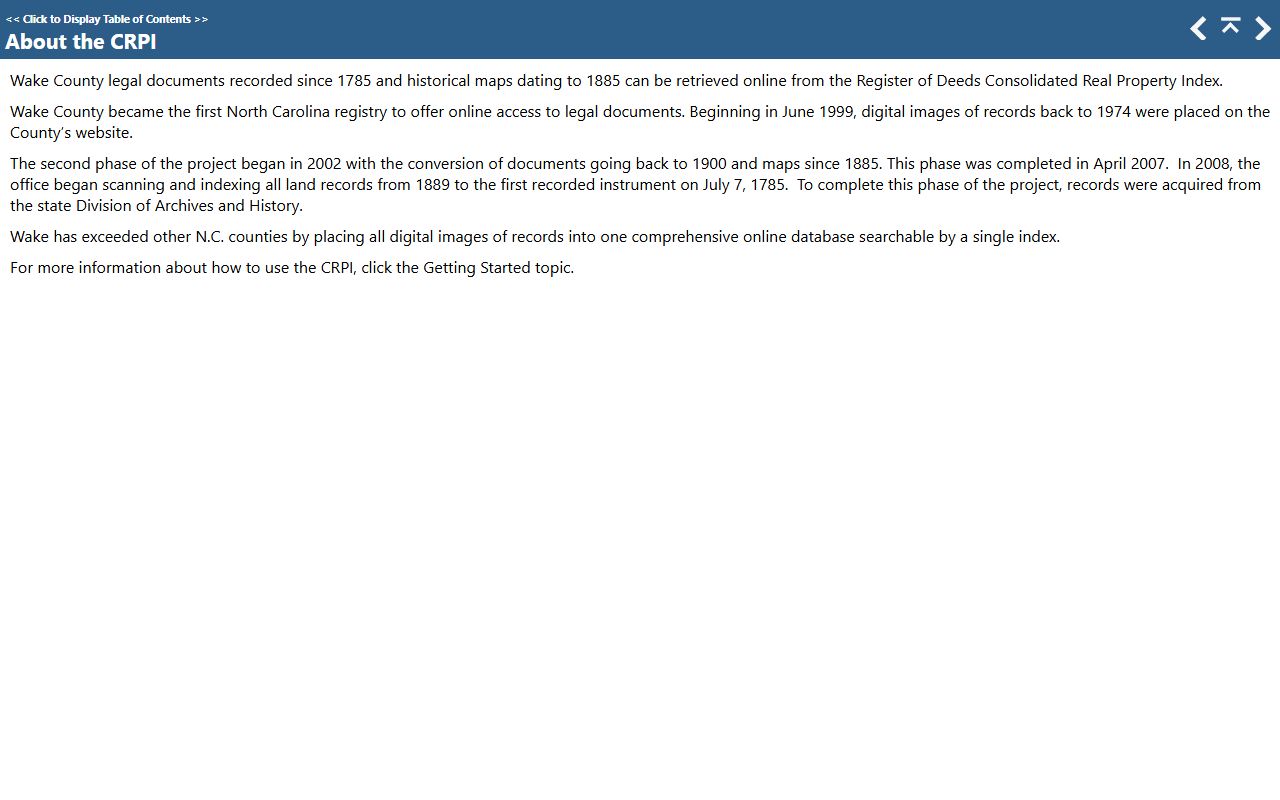
CRPI documents the county's long online land-record history.
Name searches follow the CRPI search-by-name instructions.
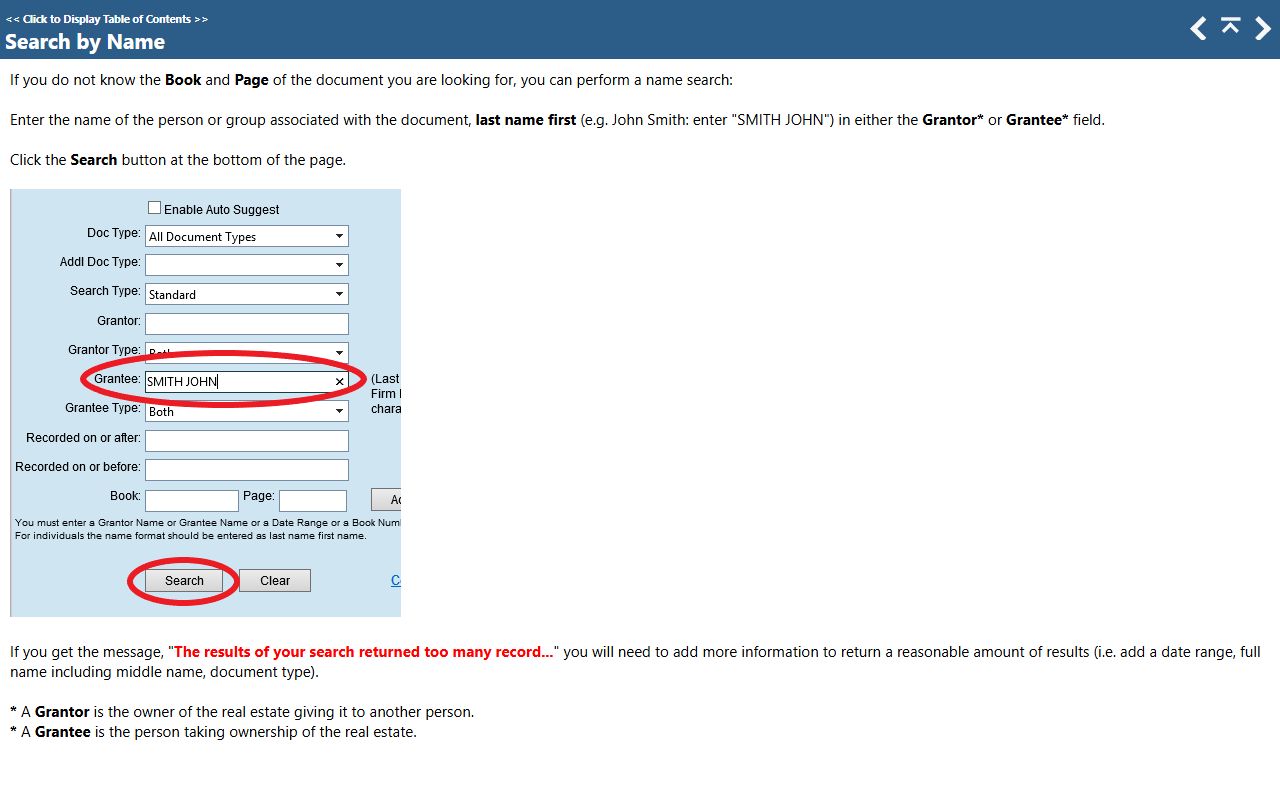
The page advises trying spelling variations when a name returns too many records.
The legacy system also supports advanced searches that filter by document type, book, and page.
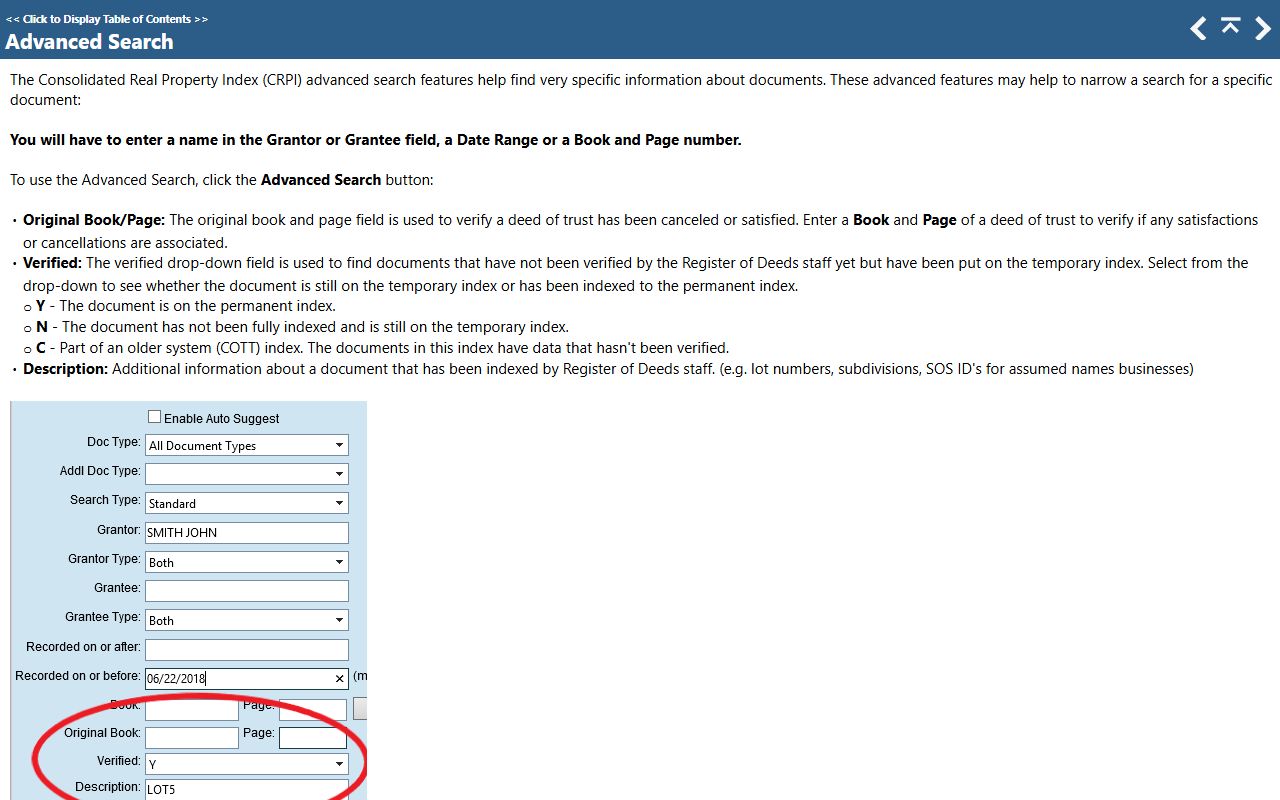
The advanced search page explains the extra filters for narrowing recorded documents.
Recorded instruments follow the county's real property index standards.
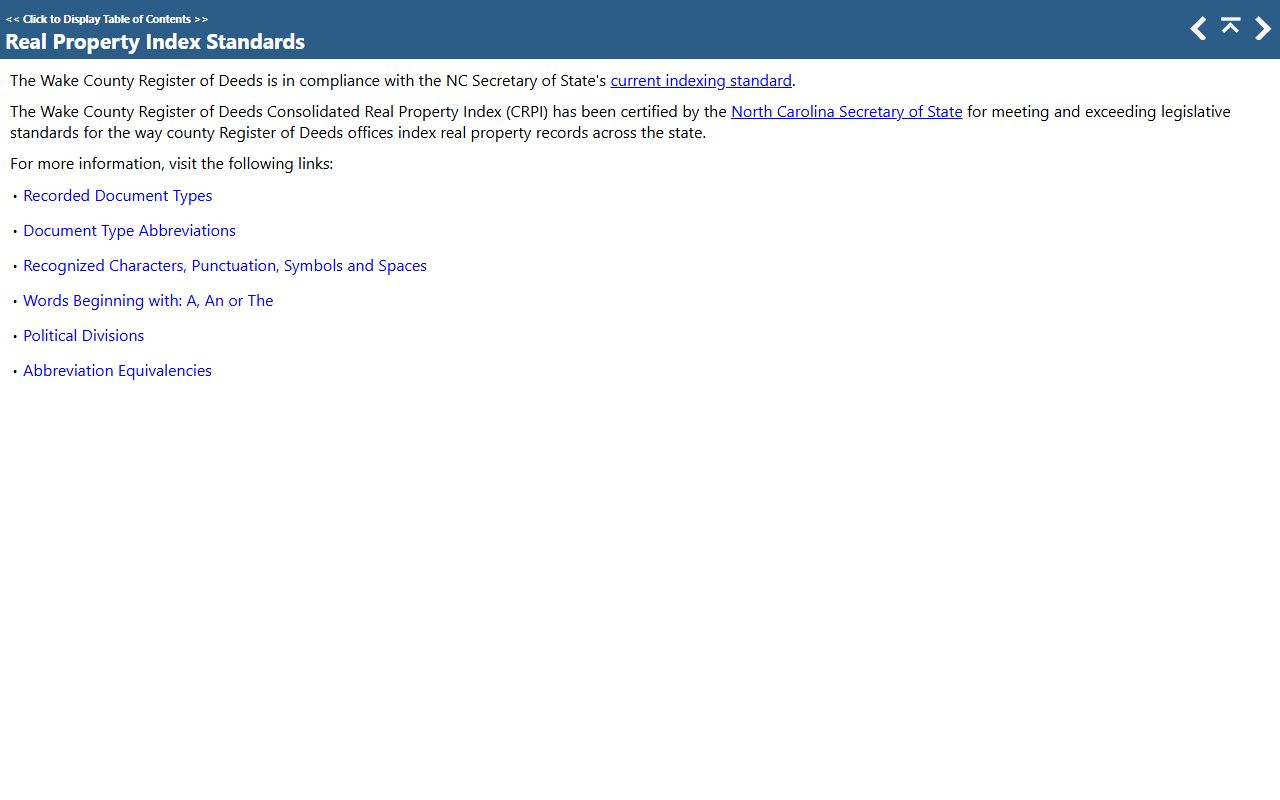
The standards page certifies how documents are indexed for public search.
Register of Deeds recording duties are set by N.C.G.S. § 161-14.
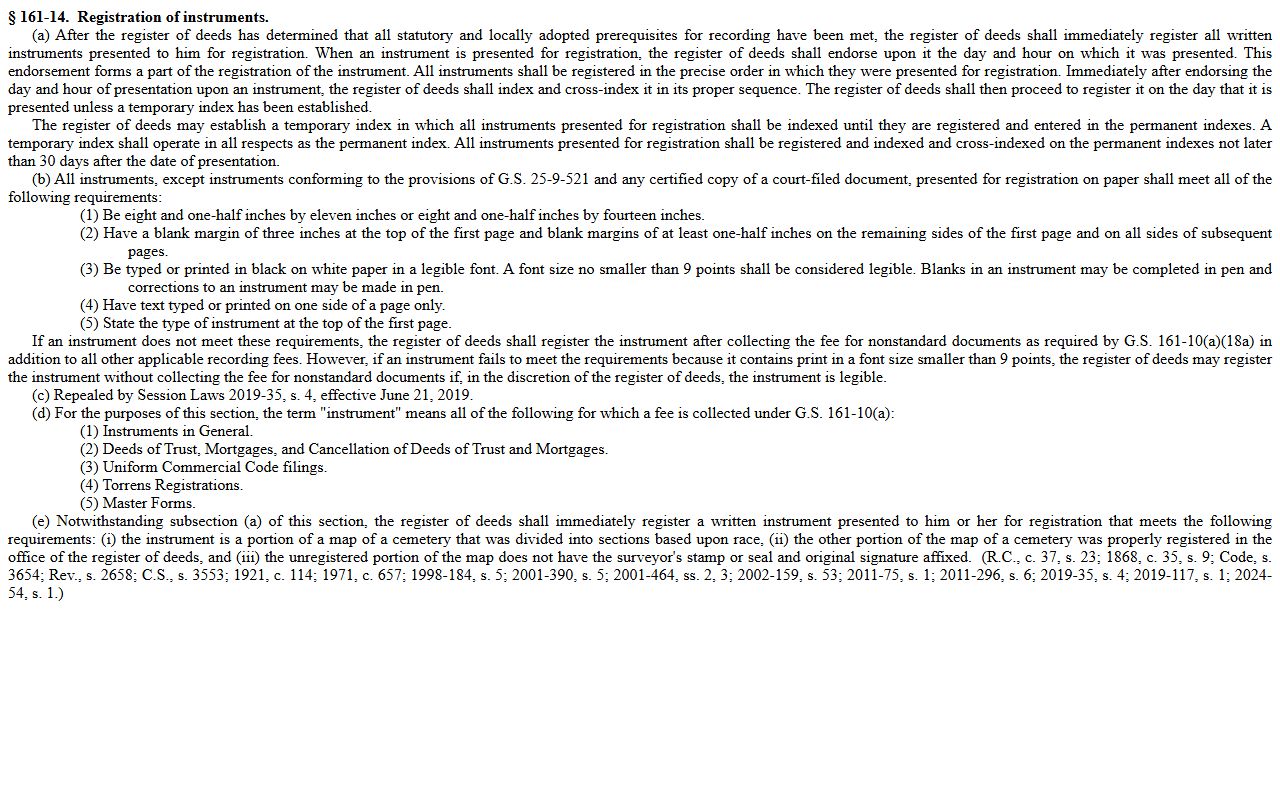
The statute lists the instruments the Register of Deeds must record and index.
Sheriff and Law Enforcement Records
Law enforcement records follow their own access rules. Basic arrest information and case dockets may be public, but investigative material is limited by N.C.G.S. § 132-1.4. Investigative notes, witness statements, confidential informant data, and active investigation files can be withheld even when a routine arrest record is available. Sheriff records requests go through the Wake Sheriff or county public records process, not the court clerk.
Criminal investigation limits are set in N.C.G.S. § 132-1.4.
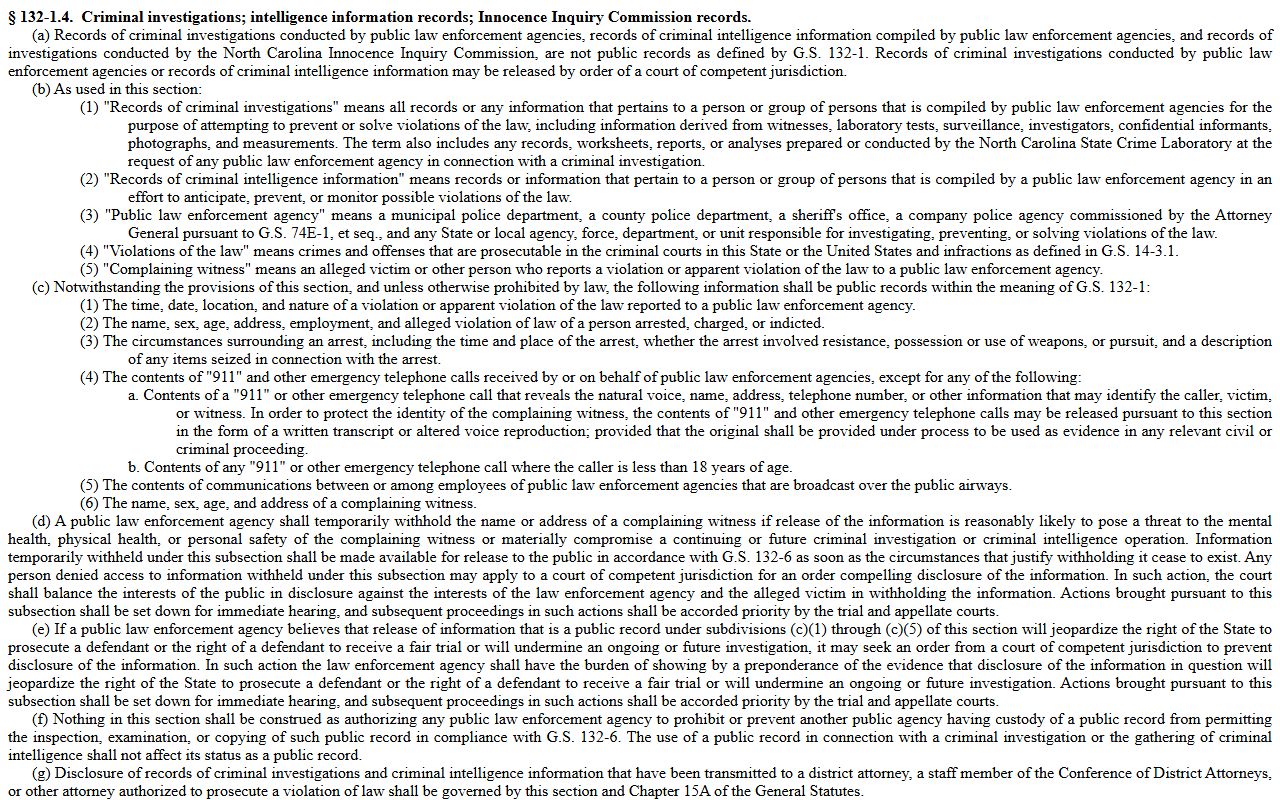
The statute separates routine arrest information from protected investigative material.
Fees and Copy Charges
North Carolina lets agencies charge for copies and certain special services. N.C.G.S. § 132-6.2 governs those charges, and the basic principle is actual cost. Agencies do not have to create or compile records that do not exist, and a complex special-service request can carry an added charge. Confirm the exact fee with the office that holds the record before you order.
| Item | Amount |
|---|---|
| Inspection of public records | No charge for viewing |
| Copies | Actual cost under N.C.G.S. § 132-6.2 |
| Special-service charge | May apply to complex or large requests |
| Certified court copies | Clerk copy fee |
Copy and special-service fees are governed by N.C.G.S. § 132-6.2.
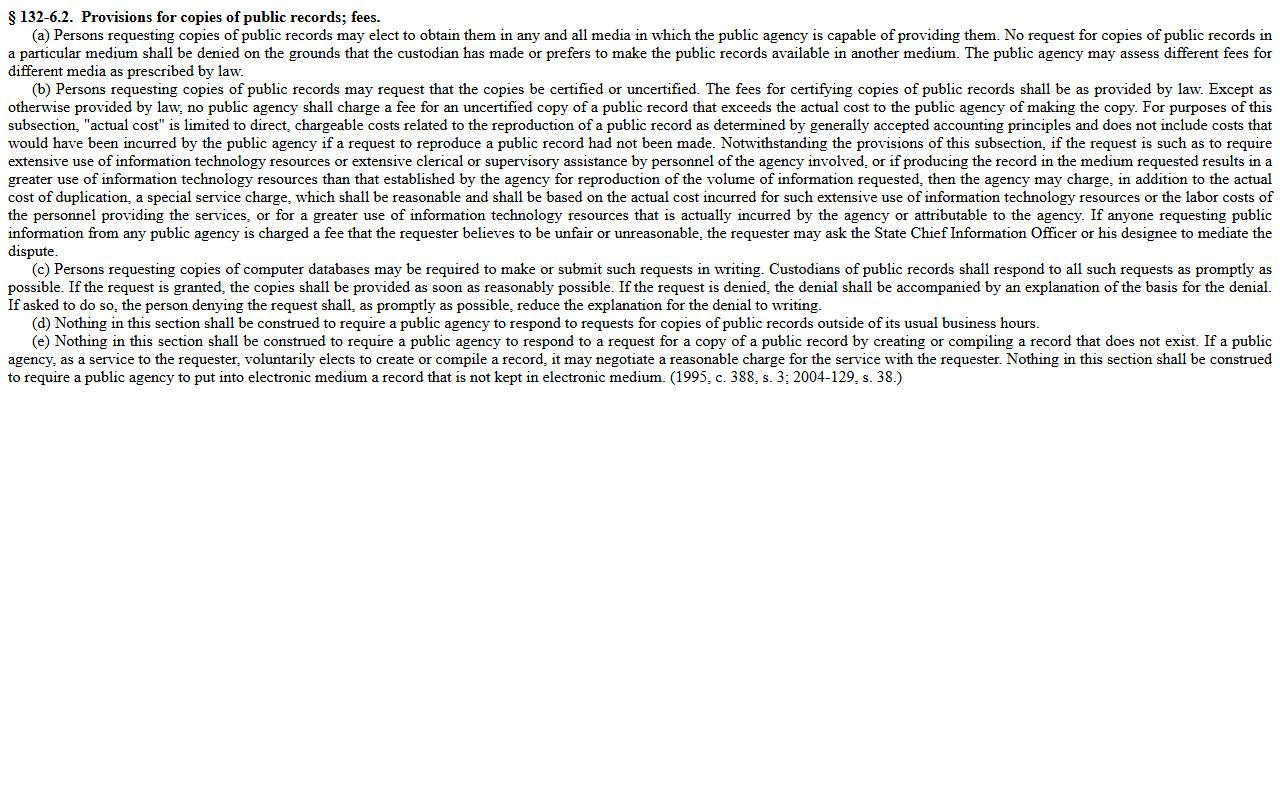
The statute sets the actual-cost rule for copies and special services.
Public Records Request Fields
A clear request gets a faster answer. Whether you use a form or an email, include enough detail to locate the record. The fields below are the kind a public records request asks for.
| Field | Type | Required | Notes |
|---|---|---|---|
| Requester name and contact | Text | Usually | So the office can respond. |
| Record description | Text | Yes | Title, type, and subject of the record. |
| Date range | Date | Helpful | Narrows the search. |
| Department or custodian | Text | Helpful | The office that owns the record. |
| Format preference | Choice | No | Paper, electronic, or inspection only. |
For a court case, include the case number, party name, and case type so the Clerk can find it.
Confidential Records
Some records are closed even though most are open. Juvenile delinquency records, adoption files, sealed and expunged criminal records, and certain domestic violence details are restricted. Protected identifiers like Social Security numbers, financial account numbers, and medical information are redacted. A sealed court file is reached through a motion in the case, not a public records request. When an office withholds a record, ask which statute or rule it relies on. The reason is not always that a whole file is closed; often a single page or field is redacted while the rest is released. A police report, for example, may show basic arrest facts while investigative detail is held back. Understanding that difference helps you ask for the part that is open.
If a Request Is Denied or Delayed
A denial is not always the end. There is a sensible order to follow before you escalate, and most of it is about being precise. Identify the right custodian, describe the record well, and ask for the legal basis if access is refused.
- Confirm you asked the office that actually holds the record.
- Describe the record with a case number, name, date range, or title.
- If denied or delayed, ask which statute or rule applies.
- For Judicial Branch records, consider voluntary pre-litigation mediation.
- For a sealed case file, file a motion in the case instead.
Being specific often resolves a delay faster than escalating, because a vague request is hard for any office to fill.
Pre-Litigation Mediation for Denied Requests
If you believe a Judicial Branch public record was wrongly withheld, the NCAOC policy points to voluntary pre-litigation mediation. You complete and file form AOC-CV-830 with the proper court to start it. Public records law also allows court enforcement if access is unlawfully denied. For a sealed case file, though, the remedy is a motion or petition in the case, not a public records claim. Keep copies of your request and any reply, since a clear paper trail helps if the matter goes further.