
The Wake County Clerk of Superior Court
North Carolina uses a unified statewide court system, and each of the 100 counties elects a Clerk of Superior Court to a four-year term. In Wake County, the clerk is Claudia Croom. The office handles the clerical and record-keeping work for Superior Court and District Court, keeps records under rules set by the Administrative Office of the Courts, and collects money due to the State or to parties in court cases. The clerk also issues arrest and search warrants in some criminal matters and conducts initial appearances.
The records a clerk must keep are set in statute.
Clerk record-keeping duties appear in N.C.G.S. § 7A-109.
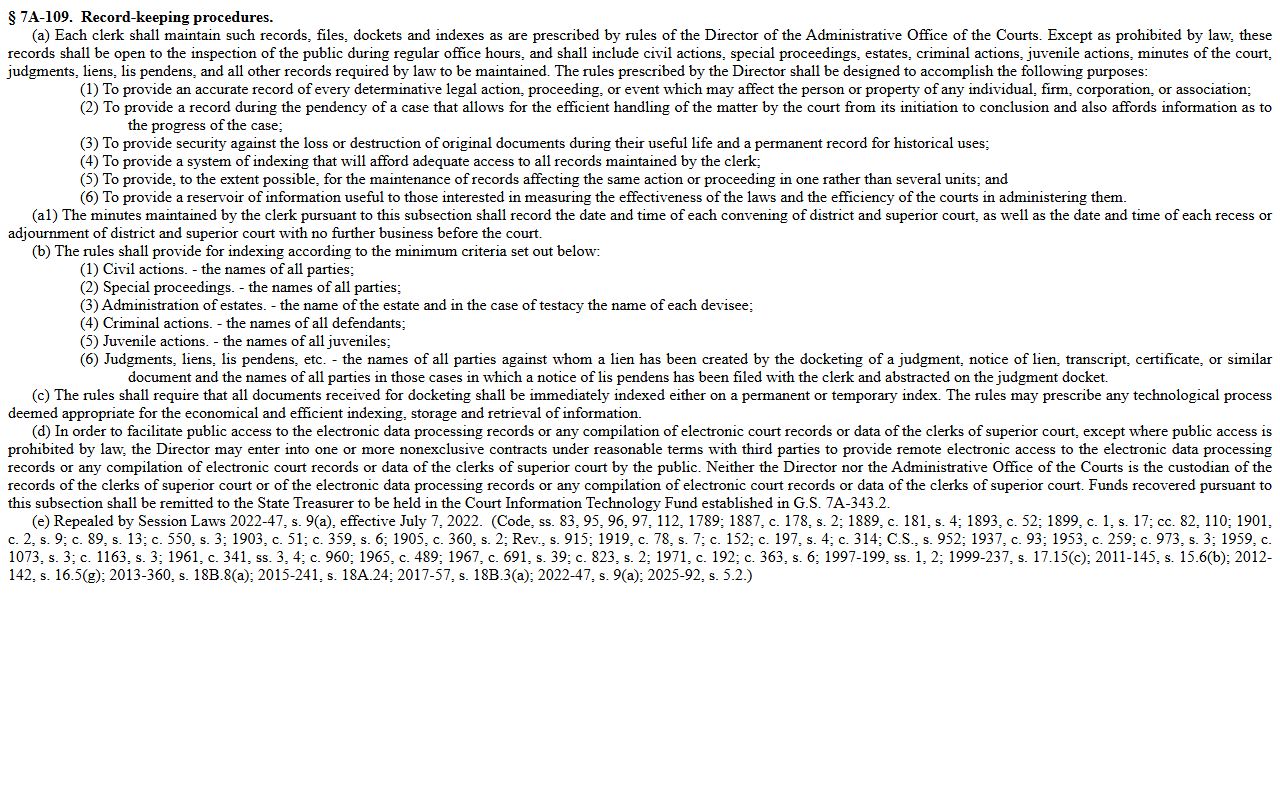
The statute directs clerks to keep court records and indexes, including the judgment index.
What the Clerk of Superior Court Does
The clerk's work spans the whole court system, which is why Wake splits its phone lines by topic. The office touches nearly every kind of case at some point, from filing to final judgment to certified copies.
- Keeps Superior Court and District Court case records.
- Issues certified copies of court documents.
- Collects fines, fees, costs, and other court money.
- Acts as judge of probate for wills and estates.
- Hears special proceedings like guardianship and partitions.
Because Wake is a high-volume county, the contact directory gives a separate number for traffic, criminal, civil, estates, and special proceedings.
The clerk also administers trusts, hears partition and foreclosure special proceedings, and manages the money that flows through the courts. Since Wake joined the statewide eCourts system in 2023, much of the filing and case management runs on the same Odyssey platform used across the state. That shift changed how some older records display, but the clerk remains the office that certifies and releases the official file.
Wake Clerk Phone Lines by Topic
Wake County does not route everything through one clerk line. The contact directory splits calls by case function, which gets you to the right desk faster. The table below lists the published lines for common needs.
| Topic | Phone |
|---|---|
| Clerk of Superior Court (main) | (919) 792-4000 |
| Traffic, misdemeanors, and felonies | (919) 792-4300 |
| Record checks and expungements | (919) 792-4325 |
| Divorce, custody, pending cases | (919) 792-4125 |
| Estates | (919) 792-4450 |
| Adoption, guardianship, foreclosure, name changes | (919) 792-4600 |
Small claims, judgments, and finance each have their own line in the full directory as well.
Court Records Custodian
The Clerk of Superior Court is the official custodian of Wake court files. The eCourts Portal lets the public find case information online, but the clerk holds the master record and issues anything certified. North Carolina's public records law requires custodians to allow inspection at reasonable times and to furnish copies as promptly as possible. It does not require the office to create a record that does not already exist.
The inspection-and-copies rule is set in N.C.G.S. § 132-6.
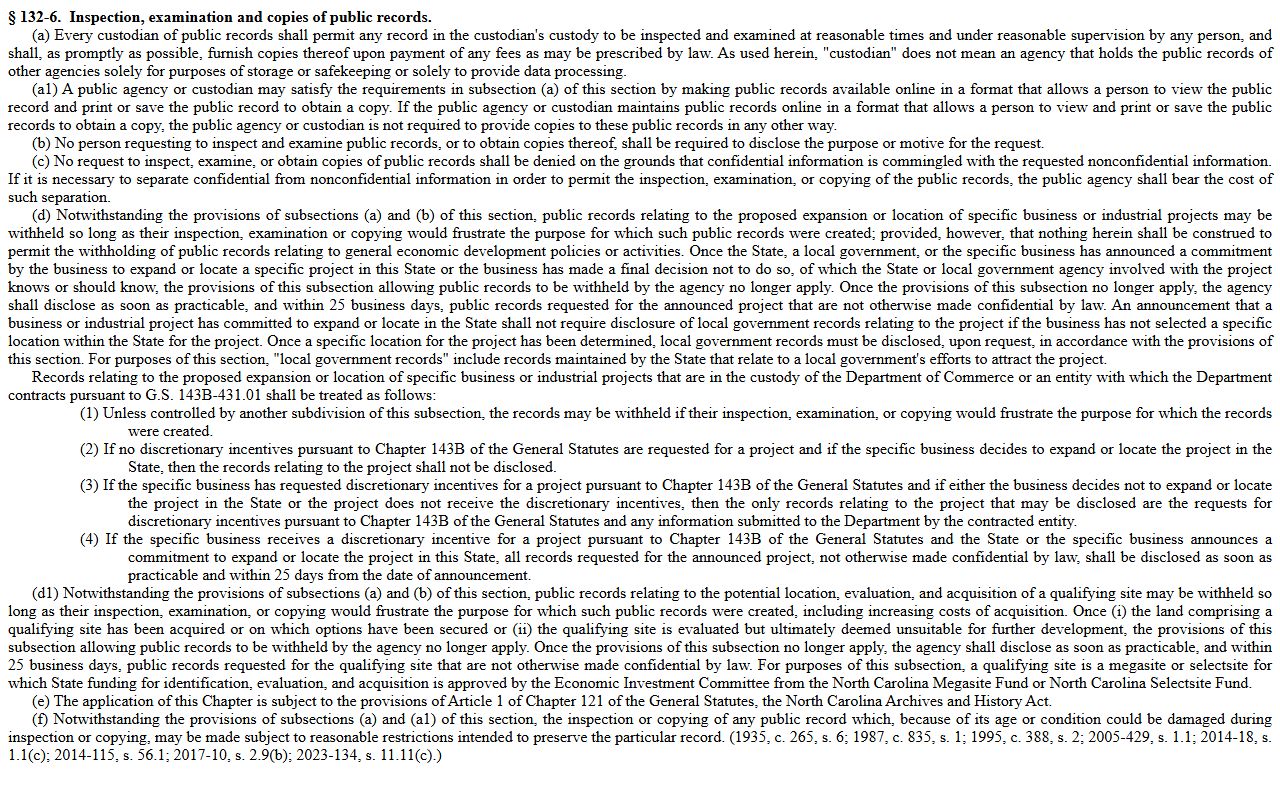
The statute requires custodians to permit inspection and provide copies promptly.
How to Request a Certified Copy
A certified copy is the stamped, official version of a court document that banks, agencies, and other courts will accept. The Portal can show you the case, but only the clerk issues the certified copy. Use the steps below, and bring the case number to speed things up.
The Wake payment information page lists accepted payment types for court charges.
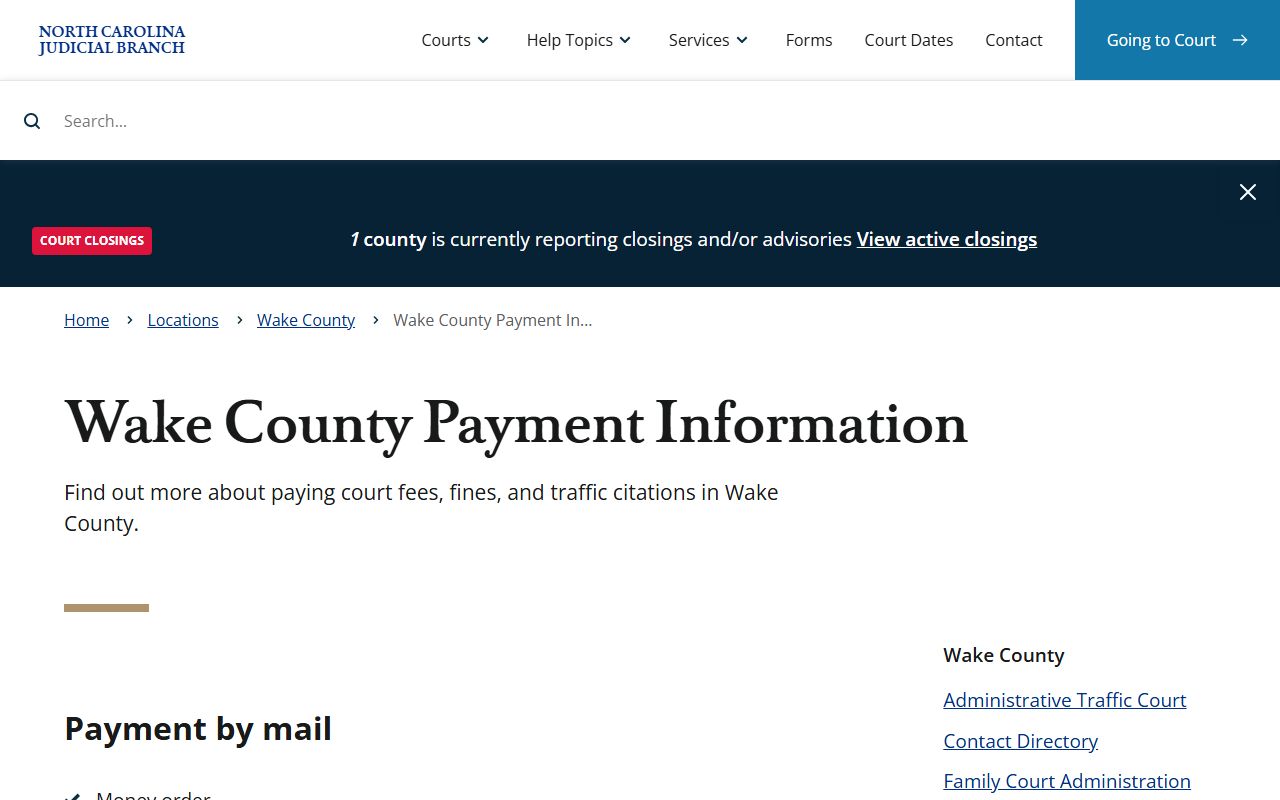
The page explains how the Wake courts accept payment for copies and other charges.
- Find the case and case number on the eCourts Portal.
- Contact the Wake Clerk line for that case type.
- Identify the exact document and how many copies you need.
- Pay the copy and certification fee.
- Pick up the certified copy or arrange delivery as the office allows.
Note: Court officials can give you records and filing information, but they cannot give legal advice or tell you which form to file.
Records Request Fields
Whether you ask in person or in writing, a clear request helps the clerk find the record fast. The fields below are what the office needs to locate a court document.
| Field | Type | Required | Notes |
|---|---|---|---|
| Case Number | Text | Helpful | The fastest way to locate a file. |
| Party Name | Text | Yes if no case number | Full legal name; try variations. |
| Case Type | Choice | Helpful | Criminal, civil, family, estate, or special proceeding. |
| Document Requested | Text | Yes | The specific filing, order, or judgment. |
| Certified or Plain | Choice | Yes | Certified copies carry a certification fee. |
For estate and special proceeding files, the decedent or petitioner name works as the lookup.
Fees at the Wake County Clerk's Office
Court fees in North Carolina are set by statute and the current AOC fee schedule, so exact totals change. Searching a case on the Portal is free, while filings and certified copies carry fees the clerk collects. Confirm current amounts with the office before you rely on them.
| Item | Amount |
|---|---|
| Portal case search | No cost |
| Civil action / special proceeding costs | Per N.C.G.S. § 7A-308 and AOC schedule |
| Estate administration costs | Per N.C.G.S. § 7A-307, based on estate value |
| Expunction petition (most charges) | $175 |
| Certified copies | Clerk copy and certification fee |
Civil and special proceeding costs are governed by N.C.G.S. § 7A-308.
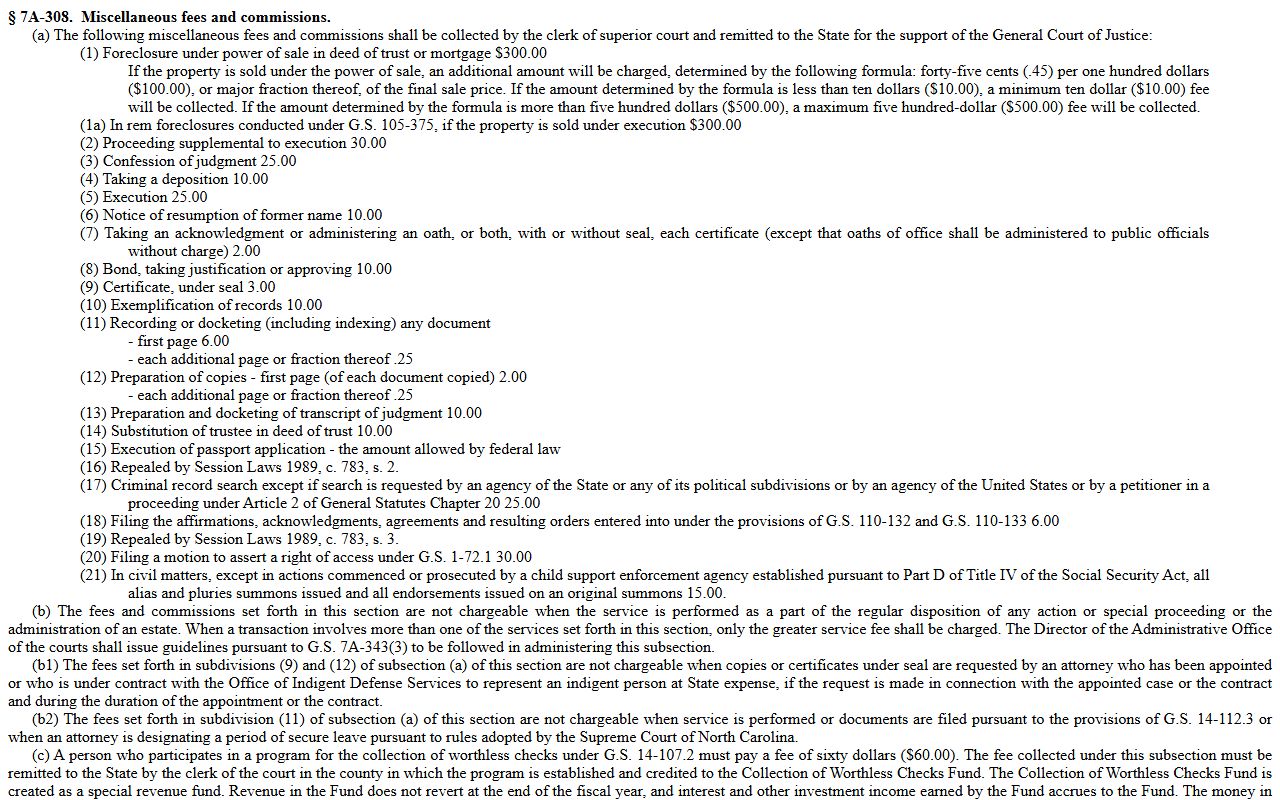
The statute sets filing and court costs for civil actions and special proceedings.
Filing With the Wake County Clerk
Filing now runs largely through the statewide eCourts tools. Attorneys and many parties file electronically through File & Serve, while self-represented people can use the Guide & File service to build the right documents through a guided interview. Some filings still come in at the counter. Wake also posts local rules and local forms, though some files may be removed temporarily in 2026 for accessibility work, with email options for a few civil documents.
Whichever path you use, the clerk keeps the filed record and collects the required fees. If you are not sure which form fits your situation, the help topics or a lawyer can guide you, since the clerk cannot. Keeping your case number handy makes every later step, from copies to payments, much faster.
Clerk as Judge of Probate
One feature surprises people from other states: the Wake clerk is also the judge of probate. The office handles wills, estate administration, guardianship, and other special proceedings, and it can decide contested matters within that role. Estate questions go to the Estates division, and adoption, guardianship, foreclosure, and name changes go to special proceedings. For the full breakdown, see the Wake County probate records page.
Clerk Versus Register of Deeds
The clerk and the Register of Deeds are different offices, and mixing them up sends people to the wrong counter. The clerk keeps court case files and certified court copies. The Register of Deeds keeps deeds, maps, marriage licenses, vital records, powers of attorney, and assumed business names. A divorce judgment is a clerk record; a marriage license is a Register of Deeds record. When you need a recorded land or vital record, the marriage and divorce records page and the Register of Deeds are the right stop.
Contact and Location
The clerk's court functions run from the downtown Raleigh court buildings. Civil filings center on the Wake County Courthouse, while criminal matters run from the Justice Center one block away. The map below shows the courthouse location.
Clerk of Superior Court
Wake County Courthouse
316 Fayetteville St. Mall
Raleigh, NC 27601
(919) 792-4000
Mon-Fri 8:30 a.m.-5:00 p.m.
A location view is captured from the courthouse map for the Fayetteville Street Mall address.

The courthouse sits in the downtown Raleigh government block on Fayetteville Street Mall.
Legal Help and the No-Advice Rule
The clerk cannot give legal advice, and that limit is firm. Court staff can hand you forms and explain filing steps, but they cannot tell you whether you qualify for relief or how to argue a case. For advice, use a private attorney, the lawyer referral service, or legal aid where you qualify. Self-represented litigants must follow the same rules of procedure and evidence as attorneys do. The NC Bar Association runs a referral service that connects people to a lawyer.
The NC Bar Association find an attorney service helps connect you with counsel.
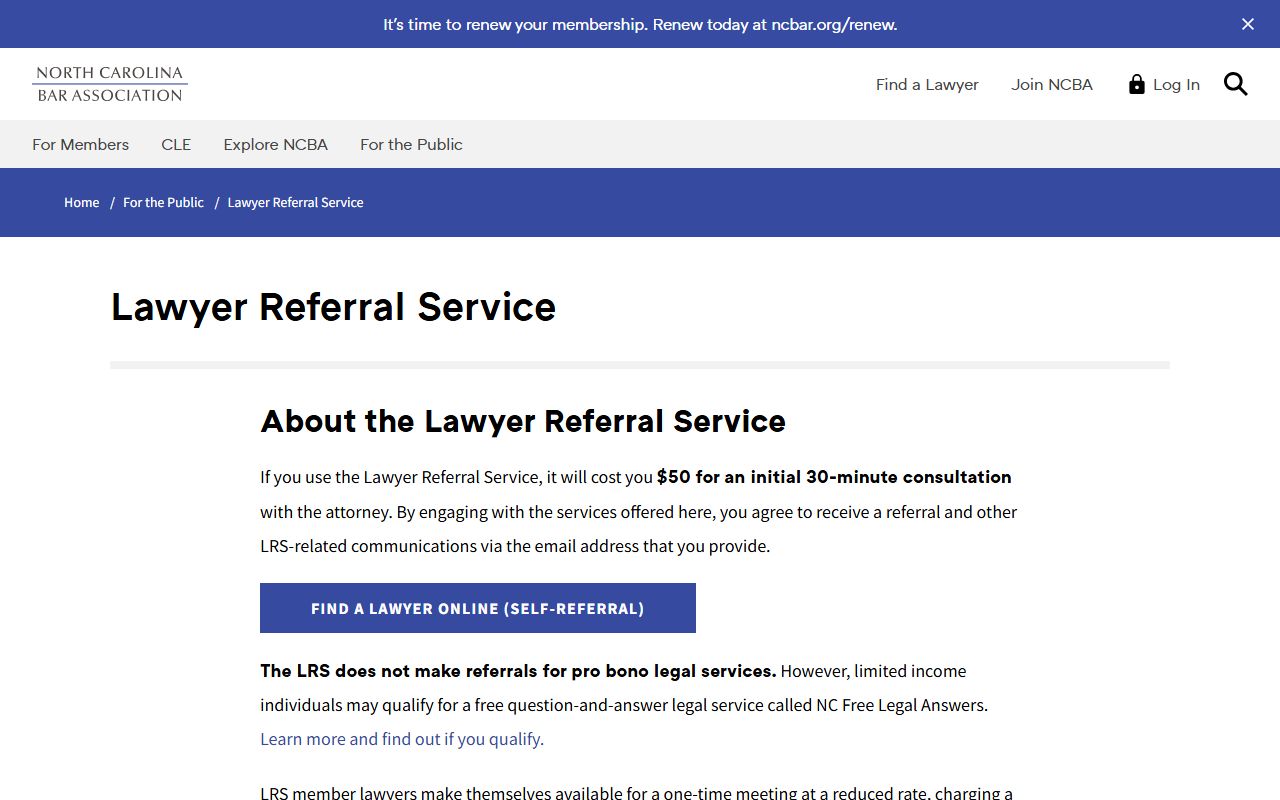
The referral service is a starting point when you need legal advice the clerk cannot give. Legal Aid of North Carolina is another option for those who qualify by income and case type.