
How to Use the Wake County Jail Roster
The official local tool is the Wake County Sheriff's inmate inquiry portal, run through a Police-to-Citizen service. It lists people currently booked into the county detention facilities. The portal blocked automated access during research, so the exact on-screen labels should be confirmed in a browser, but it works like other name-based jail roster tools. The Sheriff's main department page links inmate services, visitation, and inmate accounts.
Use a full legal name, and confirm a match with a date of birth or booking number when the list shows more than one person.
The Wake County Sheriff's Office page links the inmate inquiry and detention services.
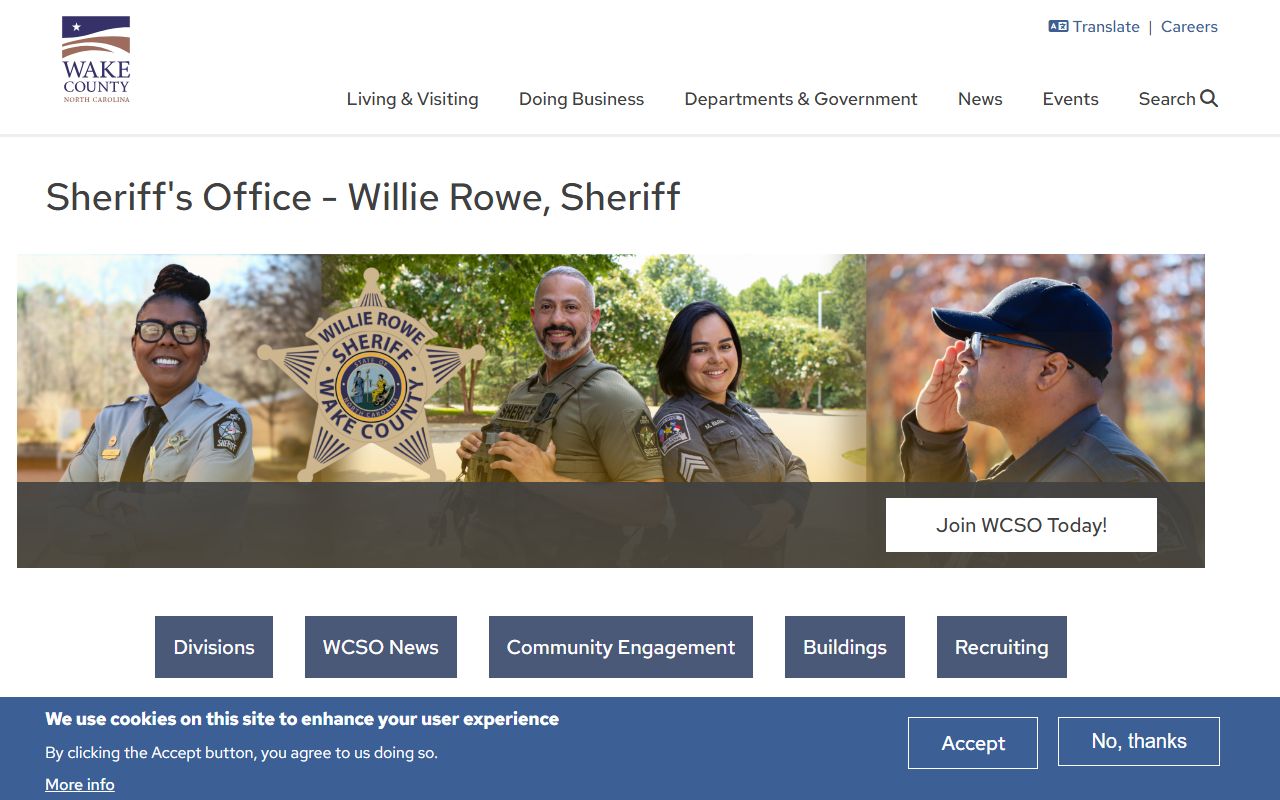
Sheriff Willie Rowe's department page is the hub for inmate accounts, visitation, and records.
- Open the Wake Sheriff inmate inquiry portal.
- Enter a last name, then a first name to narrow the list.
- Confirm the right person with date of birth or booking number.
- Review charges, bond, housing facility, and custody status.
- Use the eCourts Portal for the matching court case and dates.
The direct inmate inquiry portal is hosted at wakeso.policetocitizen.com.

This is the official portal for current county jail bookings and custody status.
Wake County Inmate Search Fields
The inmate inquiry uses simple name-based fields. You do not need every field; a last name alone often returns a list you can narrow. The labels below reflect the common Police-to-Citizen layout, since the live Wake labels could not be captured during research.
| Field Label | Type | Required | Notes / Format |
|---|---|---|---|
| Last Name | Text | Primary | Try fewer characters and spelling variations. |
| First Name | Text | No | Narrows common last names. |
| Search | Button | Yes | Submits the query. |
| Reset / Clear | Button | No | Clears the form to start over. |
Note: Confirm the exact field names and result columns in a live browser, since the portal layout can change.
What a Wake County Inmate Record Shows
A jail profile holds the basics of a current booking. The exact fields depend on what the Sheriff publishes, and sensitive details are withheld. The table below lists the fields a public inmate profile commonly includes, each paired with what it tells you.
| Field | What It Shows |
|---|---|
| Name and Booking Number | The held person and the jail's intake identifier. |
| Booking Date and Time | When custody began; helps separate same-name matches. |
| Custody Status | Whether the person is currently held or released. |
| Charges | The offenses as booked, which are accusations. |
| Bond Amount and Type | The release condition set by a magistrate or judge. |
| Housing Facility | Which Wake detention facility holds the person. |
| Next Court Date | The upcoming setting, where published. |
Medical and mental health classification, security risk flags, and protective custody reasons are not public.
Wake County Jail Facilities
Wake County operates detention facilities in and near downtown Raleigh under the Sheriff's Office. The downtown Public Safety Center and the Hammond Road Detention Center are the two main locations. Confirm which facility holds a person through the inmate inquiry before you travel, because housing can change.
John H. Baker Jr. Public Safety Center
330 S. Salisbury St.
Raleigh, NC 27601
(919) 856-6900
Sheriff headquarters and detention functions
Wake County Detention Center
3301 Hammond Road
Raleigh, NC 27603
(919) 856-6900
Main county detention center
The Public Safety Center page lists the downtown facility's location and services.
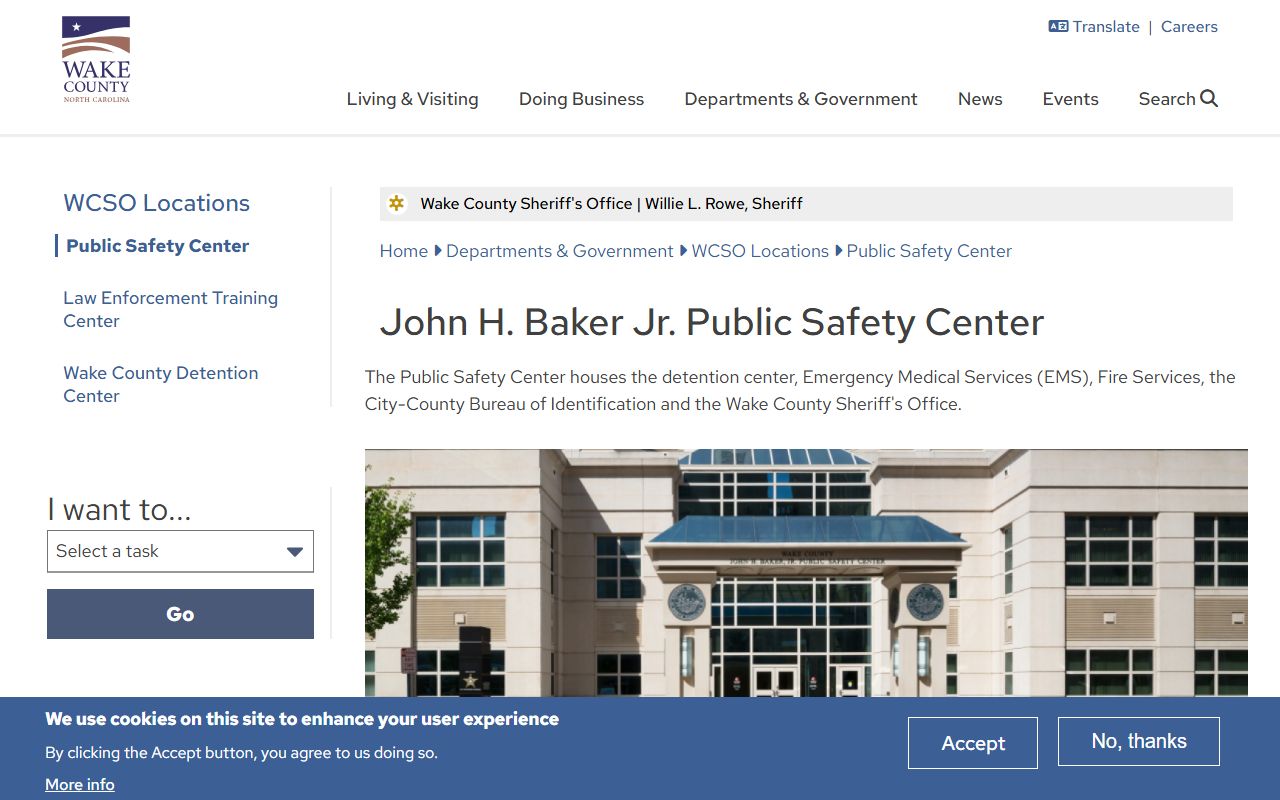
The Baker Public Safety Center anchors the Sheriff's downtown detention operations.
The Detention Center page covers the Hammond Road facility.
The Hammond Road Detention Center holds much of the county's jail population.
The Booking and Magistrate Process
Most Wake arrests run through a magistrate first. Magistrates are District Court judicial officers who issue warrants, set bail, and make the first release decision. After arrest, detention staff build the custody record. They confirm identity, inventory property, screen for medical and security needs, assign a booking number, and take fingerprints and a photo where required.
The court file and the jail file are related but separate systems. A first appearance often follows quickly for criminal defendants, and the court tracks the case while the Sheriff tracks custody. That separation is why the two records can show slightly different timing for the same person.
After intake, detainees are assigned housing based on gender, medical and mental health needs, security risk, the charges, separation needs, and available space. Public search tools do not reveal the detailed reasons behind a housing or classification decision. Personal property is handled by facility policy, so follow the Sheriff's instructions rather than the courthouse clerk for property questions. Attorney visits and privileged mail are managed separately from social visits and regular mail.
Bond and Custody Status
Custody status is the field most searchers care about. A person can be held, or released after bond, a court order, dismissal, sentence completion, or transfer. Bond comes in a few forms. A secured bond needs money, property, or a surety before release. An unsecured bond owes the amount only if conditions break. A written promise releases the person on a promise to appear.
A jail record may show a public bond figure, but the magistrate or judge order controls the real condition. For anyone just arrested or just bonded out, the status can change within hours, so verify before relying on it.
County Jail Versus State Prison Versus Federal Custody
County jails are short-term local facilities. They hold newly arrested people, pretrial defendants, probation violators, and people serving short sentences. State prison and federal custody are different systems with their own search tools. A person can move from the Wake jail to state or federal custody, so a single tool may not show the full picture.
| Custody | Custodian | Where to Search |
|---|---|---|
| County jail | Wake County Sheriff | Sheriff inmate inquiry |
| State prison and supervision | Dept. of Adult Correction | DAC offender search |
| Federal custody | Bureau of Prisons | BOP inmate locator |
The North Carolina DAC offender search covers state inmates, probationers, and parolees.
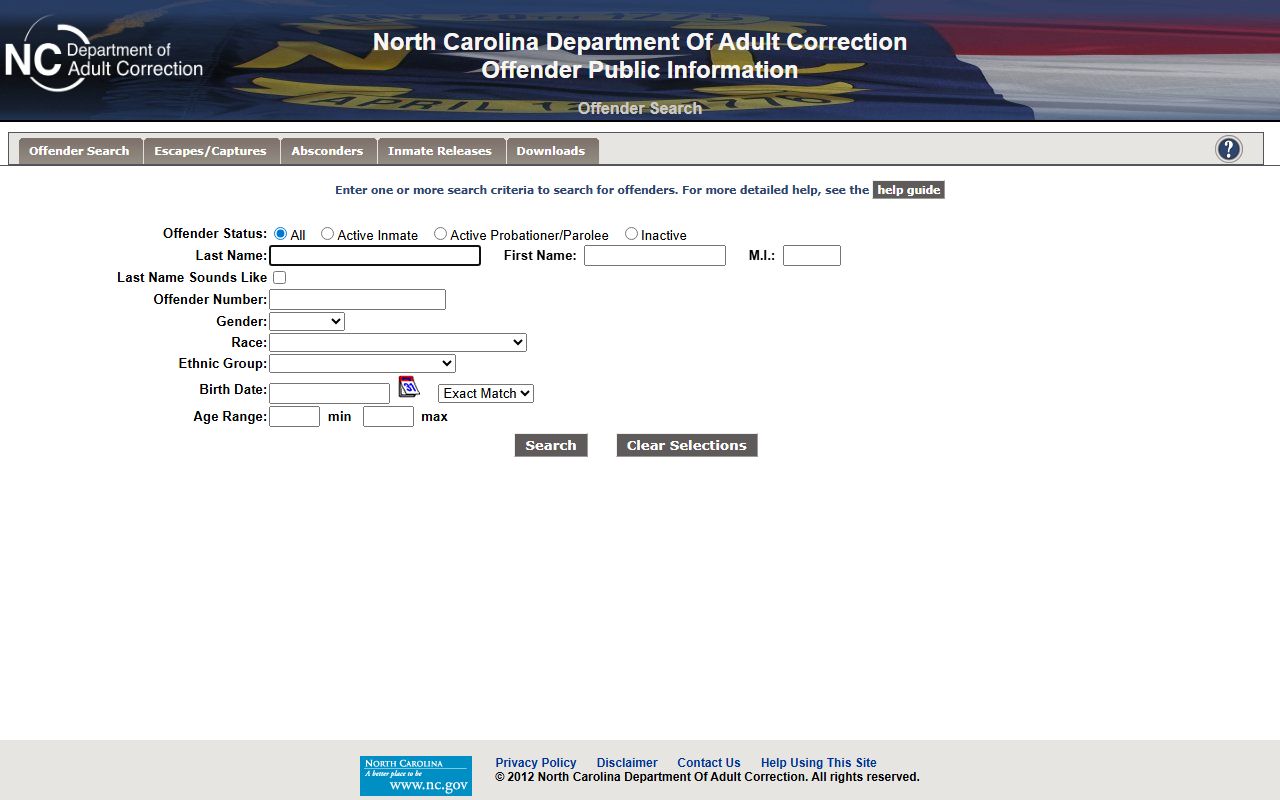
The DAC search is the place to look when a person moved from the Wake jail to state prison.
For release tracking across all three systems, see the released inmates page.
Inmate Record Versus Court Record
It helps to be clear about what a jail record can and cannot prove. The custody record answers whether a person is, or was, in the Wake jail and lists booking details, charges as booked, and bond or custody status where published. It does not show final guilt, the full disposition, or the complete court history. For that, you go to the court case in the eCourts Portal.
The reverse is also true. A court case shows charges filed, hearings, and outcomes, but it does not track real-time jail housing or release. So a person can read as released in the jail tool while the criminal case stays open in court. Use the court records page for the case and this page for custody.
Visitation, Mail, and Inmate Accounts
The Sheriff's site has dedicated pages for visitation and inmate accounts. The full visitation schedule, mail rules, and deposit methods should be confirmed on those official pages, because they change and were not fully published in research. Rather than guess at times, use the table below to see what to verify before you visit, write, or send money.
| Topic | What to Confirm on the Official Page |
|---|---|
| In-person or video visits | Schedule, appointment requirement, visitor ID, and dress code. |
| Attorney visits | Separate professional hours and credential requirements. |
| Address format with name and booking number, plus banned items. | |
| Inmate accounts | Deposit method, fees, posting time, and any limits. |
The Wake Sheriff visitation page and the inmate account deposit page hold the current rules.
A few general points hold across most jails. Mail usually needs the inmate's full legal name and booking number, and legal mail is handled differently from personal mail. Many facilities ban cash, stamps, and altered paper, so money for an account normally goes through an approved deposit method rather than mail. Commissary ordering and any indigent supplies follow facility policy. Phone and tablet access run through a vendor with its own account setup. Always confirm the current Wake rules before you send anything, because a returned item or a blocked deposit just delays help to the person inside.
Reading Custody Status Carefully
Custody status moves fast, and a careless read causes real problems. Release from the jail is not the same as a dismissal; the criminal case can stay open and pending after a person bonds out. An old screenshot is not proof a person is still held, because status can change within hours. A release from Wake can also mean an immediate transfer to another county, to state prison, or to a treatment facility, not freedom.
Release can also be delayed for reasons that have nothing to do with the charge. Paperwork, identity confirmation, holds or detainers, multiple cases, bond verification, transportation, and medical clearance all add time. When the timing matters, confirm the live status with the jail rather than trusting a cached page.
Privacy Limits in Jail Records
Public jail data stops well short of the full file. Medical information, mental health classification, security risk level, juvenile custody, protective custody flags, and internal jail intelligence are withheld. Law enforcement investigative records carry their own limits under N.C.G.S. § 132-1.4. Charges shown at booking are accusations and can change as the case proceeds, so a jail record never proves guilt.
If the Portal Is Unavailable
The inmate inquiry can be down, slow, or behind on a very recent arrest. When that happens, contact the Sheriff or the detention facility directly to confirm custody. The Sheriff's Records Division handles records requests and can point you to the right channel. For a court date after an arrest, the eCourts Portal Search Hearings tool or the Wake criminal clerk line is the better source.
The Sheriff's Records Division page explains how to request Sheriff records.
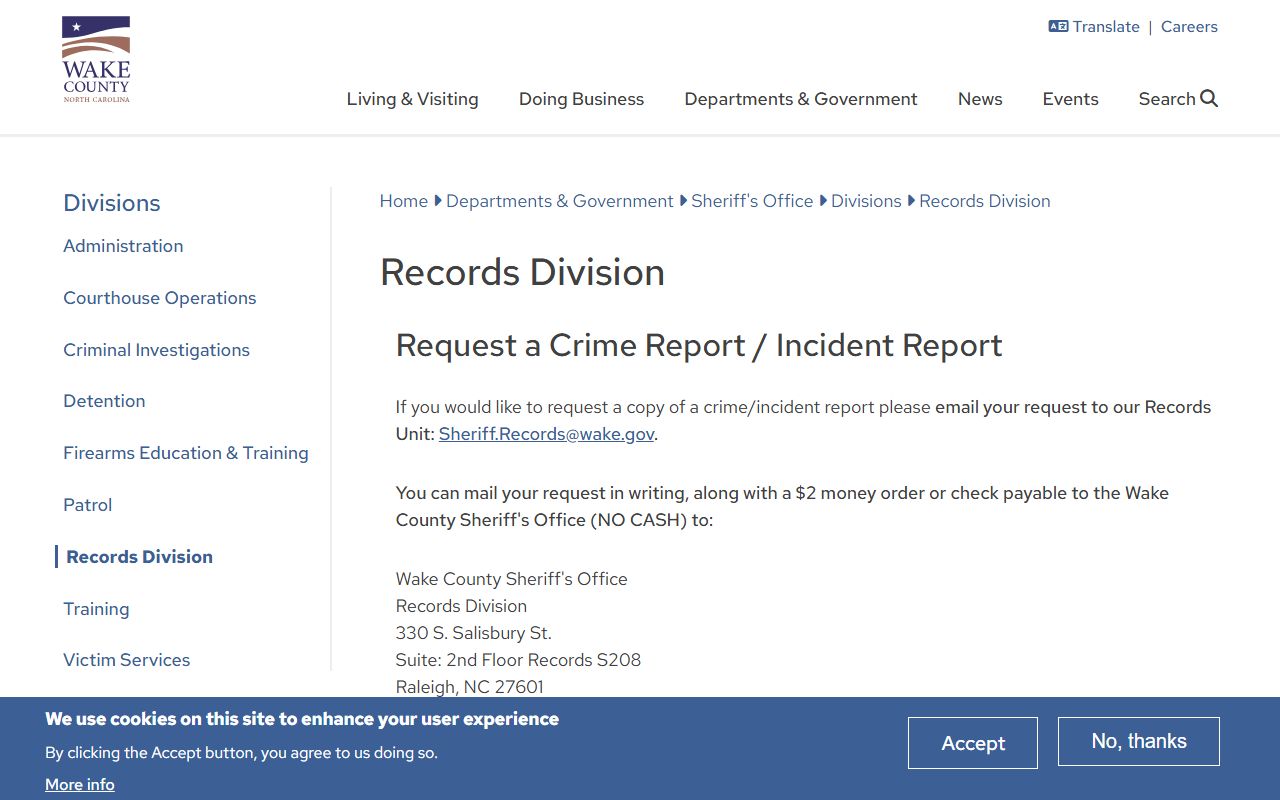
The Records Division is the official channel for Sheriff record requests when the portal falls short.
Who to Call for Wake County Inmate Questions
Different questions go to different offices, and calling the right one first saves a lot of waiting on hold. The list below matches the common need to the office that actually holds the answer.
- Current custody: start with the Sheriff inmate inquiry, then call detention if the arrest is very recent.
- Court date after arrest: use Portal Search Hearings or the Wake criminal clerk line.
- Bond amount or conditions: the jail may show a public figure, but the court or magistrate order controls.
- Criminal case documents: the eCourts Portal and the Clerk of Superior Court.
- Victim notification: VINELink and the District Attorney's victim services.
For an appointed lawyer, the request goes through the court at first appearance, and the Wake Public Defender or Indigent Defense Services handles eligible cases.