
How to Find Recently Released Wake County Inmates
Start where the person was last held. For county jail custody, the Wake County Sheriff's inmate inquiry is the local tool, and it may show a recent release or drop the listing once the person is out. If the person moved to state prison, the North Carolina Department of Adult Correction tracks them. For federal custody, the Bureau of Prisons locator is the source. Because custody can shift quickly, a "released" status in one system does not mean the case is over.
Have a full name ready. A booking number, an offender number, or a date of birth helps confirm the right person.
- Check the Wake Sheriff inmate inquiry for county jail status.
- Call detention if the arrest or release is very recent.
- Search NC DAC for state prison, probation, or parole status.
- Check the BOP locator for federal custody and release.
- Use court Search Hearings for any pending court date after release.
Note: A release from custody is not a dismissal; the underlying criminal case can stay open and pending.
Setting Up Release Notifications
VINELink is the victim notification and custody-status service used across the country, and North Carolina uses it for custody and status alerts. Instead of checking a roster by hand, you can register to be told when a status changes. The service is dynamic, so confirm the current North Carolina workflow when you sign up.
Register for alerts through VINELink for custody-status notifications.
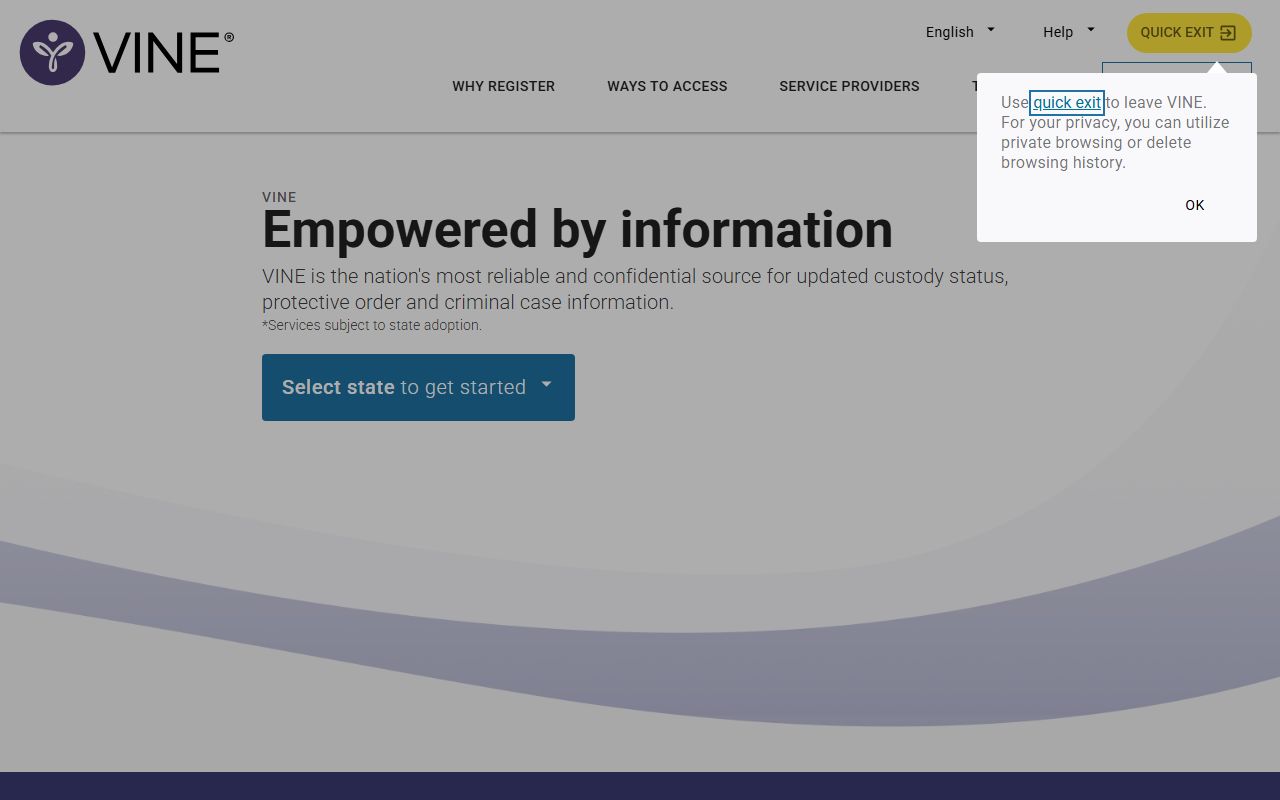
VINELink lets victims and the public enroll for alerts when a custody status changes.
The State Bureau of Investigation also links VINELink for telephone notifications when a registered sex offender's status changes. An alert is only a safety tool, though, not a full court-record database. Pair it with the court Portal if you also need to follow hearings and the case outcome.
Searching State Released Inmates
The North Carolina Department of Adult Correction runs the Offender Public Information search. It covers all offenders, active inmates, active probationers and parolees, and inactive offenders, and its navigation includes an Inmate Releases section. This is the right tool when someone moved from the Wake jail into state prison or community supervision. It is not a substitute for the county jail roster for a brand new arrest.
Search the NC DAC offender search for state custody and supervision status.
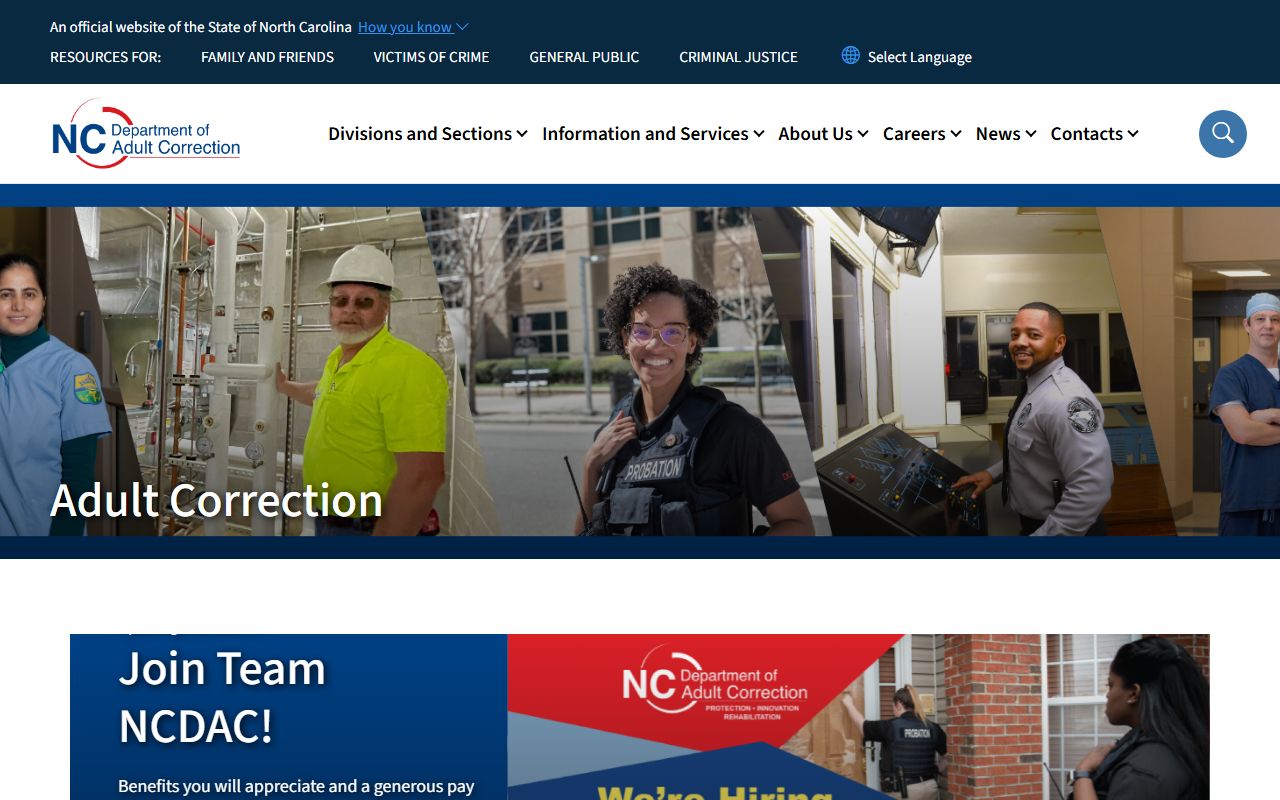
The DAC site is the state custodian for prison, probation, and parole records.
| Field Label | Type | Required | Notes / Format |
|---|---|---|---|
| Offender Status | Radio | No | All; Active Inmate; Active Probationer/Parolee; Inactive. |
| Last Name | Text | No | "Sounds Like" option broadens matches. |
| First Name | Text | No | Narrows common last names. |
| Offender Number | Text | No | The DAC offender number, if known. |
| Gender / Race | Radio | No | Optional demographic filters. |
| Birth Date | Date | No | Exact or plus-or-minus a range of years. |
A DAC result commonly shows the offender number, name, status, facility or supervision office, and key dates. Exact fields appear once a record is opened.
Searching Federal Released Inmates
The Bureau of Prisons Inmate Locator covers federal inmates from 1982 to the present. It warns that First Step Act recalculations can change release dates, so a listed date may not be current. If a person reads as Released or Not in BOP Custody with no facility shown, they are out of federal custody but may still be on parole, on supervised release, or in another jurisdiction's custody.
Use the BOP inmate locator to search federal custody by number or by name.
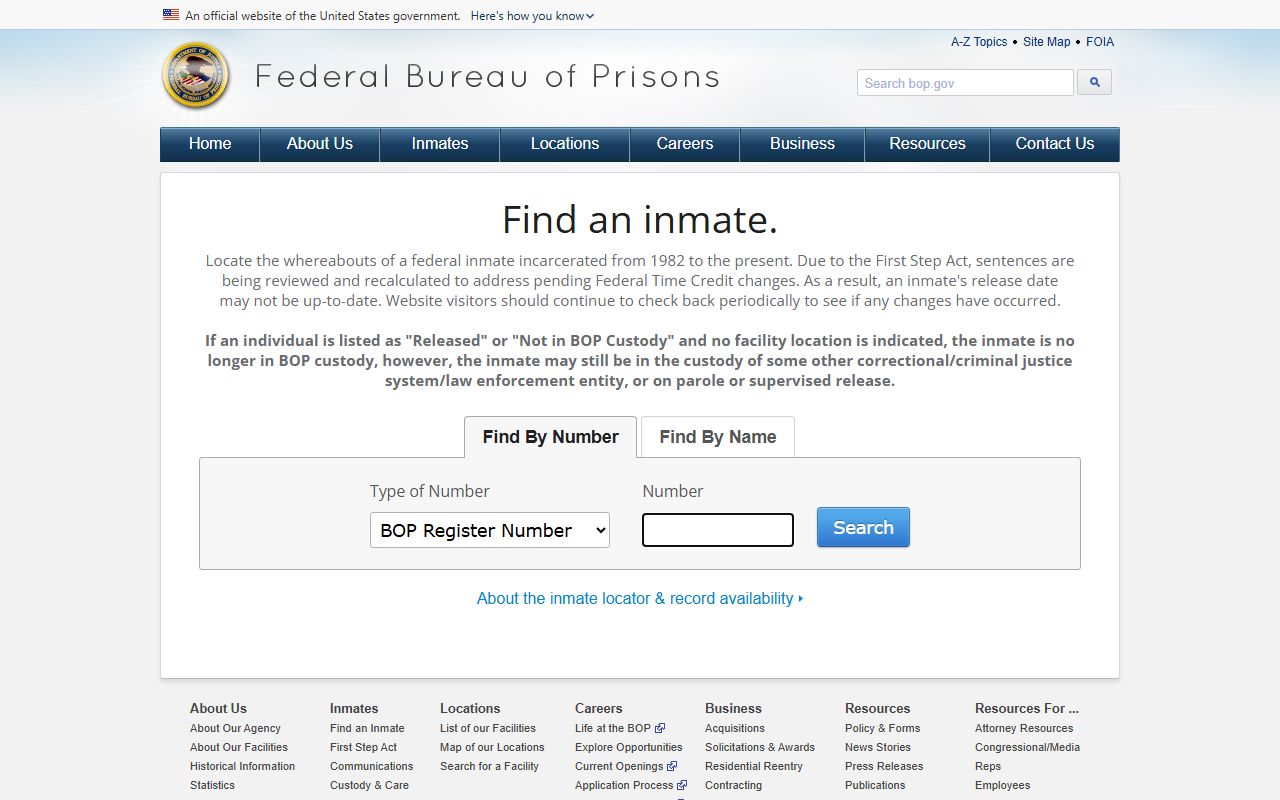
The BOP locator searches by register number or by name and demographics.
| Field Label | Type | Required | Notes / Format |
|---|---|---|---|
| Type of Number | Radio | If number search | BOP Register, DCDC, FBI, or INS number. |
| Number | Text | If number search | Register number format shown as #####-###. |
| First Name | Text | Yes in name search | Required when searching by name. |
| Last Name | Text | Yes in name search | Required when searching by name. |
| Race / Age / Sex | Dropdown | No | Optional filters to narrow results. |
A BOP result template shows the register number, name, age, race, sex, release date, and custody location when in custody.
Verifying Release in Person or by Phone
When timing matters, confirm a release with the facility rather than a cached page. For county custody, call the Sheriff or detention directly, especially right after a bond is posted. Visitation and inmate account pages can also confirm that a person is still active in the county system. A release can be delayed by paperwork, identity checks, holds or detainers, multiple cases, transportation, or medical clearance.
The Wake detention visitation page reflects whether a person is still in county custody.
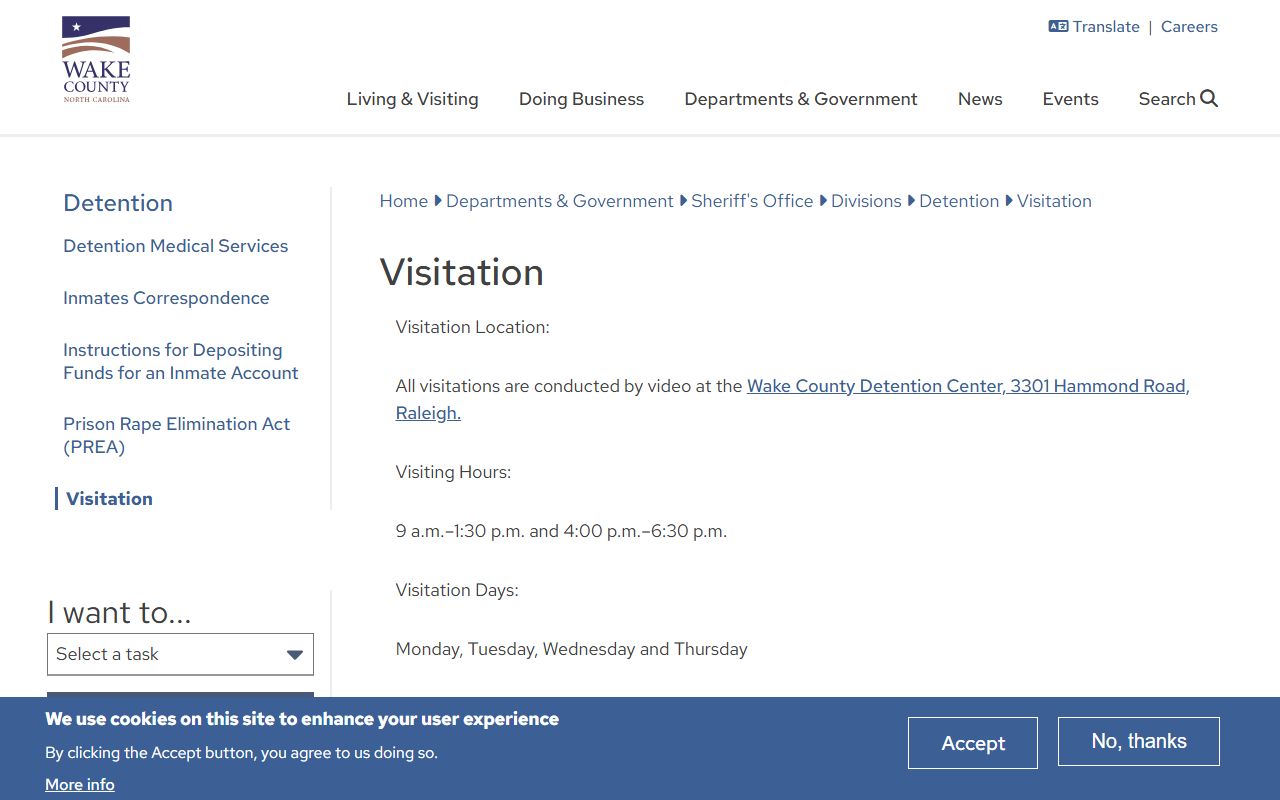
Visitation scheduling will not work for a person who has already been released.
The inmate account deposit page is another quick custody check.
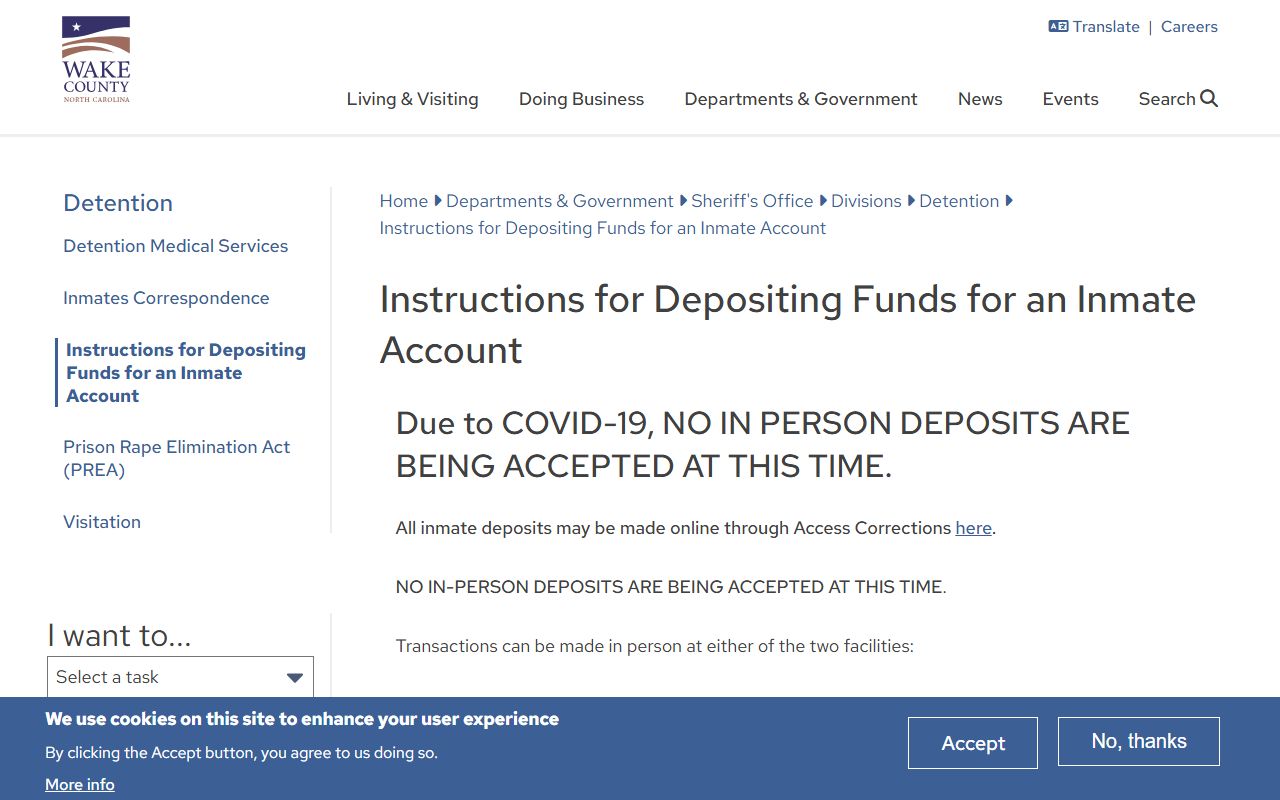
Funds on a released person's account are handled under facility refund and transfer policy.
The Sex Offender Registry
The North Carolina State Bureau of Investigation maintains the sex offender registry. Sheriffs collect information from offenders and court documents, enter it into the database, and the SBI makes certain information public online. The public can sign up for email alerts when a registered offender reports moving within 1, 3, or 5 miles of a North Carolina address. Registry information is public, but using it to threaten, stalk, or harass can be prosecuted. Juveniles adjudicated delinquent of sexually violent offenses are not in the public registry.
These programs are codified in Chapter 14, Article 27A of the General Statutes.
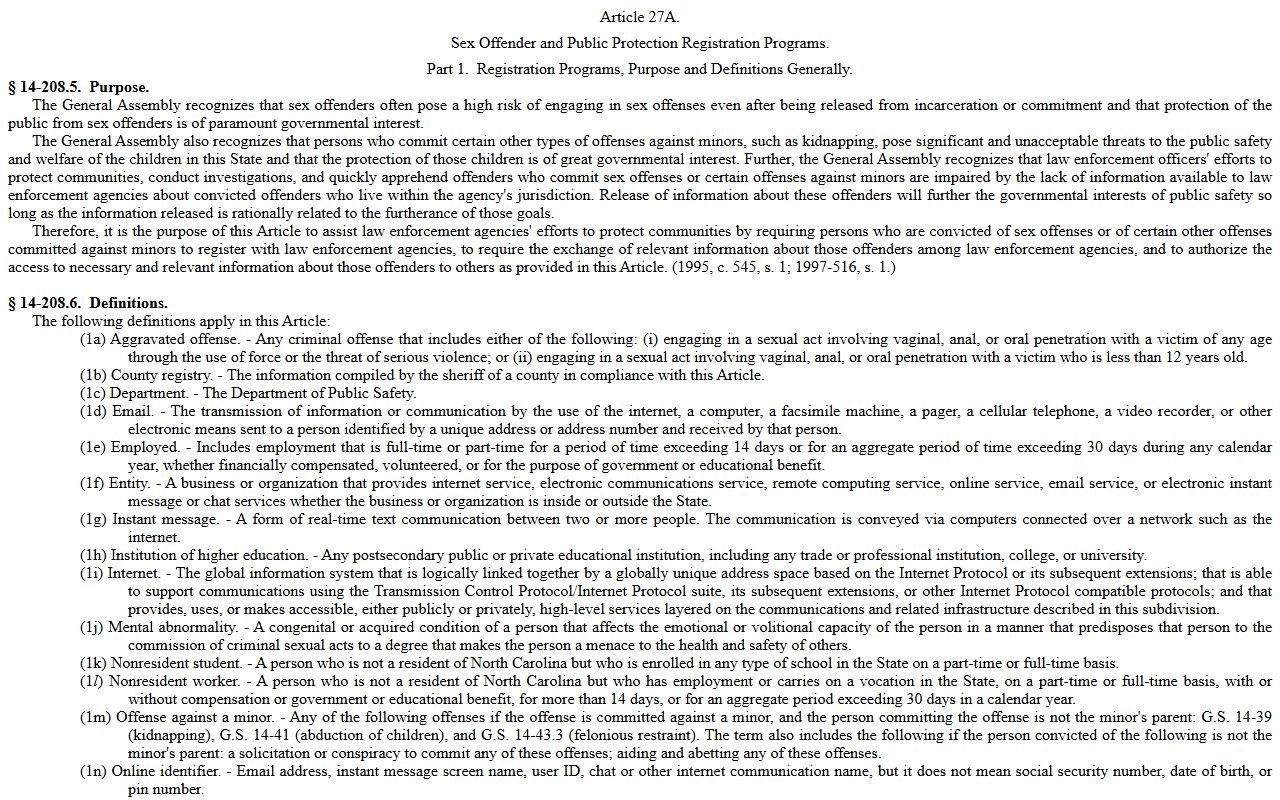
The article sets the registration requirements behind the public registry.
| Field Label | Type | Required | Notes / Format |
|---|---|---|---|
| Last Name | Text | No | Search a registered offender by name. |
| First Name | Text | No | Narrows the result list. |
| Address / Radius | Address | No | Used for proximity alerts within 1, 3, or 5 miles. |
| Accept Use Terms | Button | Yes | An acceptable-use screen appears before searching. |
A registry profile commonly lists name, photo, registered address, offense, and registration status.
Parole and Probation Information
Community supervision in North Carolina runs through the Department of Adult Correction. Probation and parole status appears in the same DAC offender search used for inmates. A person released from prison may still be under supervised release or parole, which is why a "released" label does not always mean the case is closed. The contact card below points to the state agency that manages supervision and release records.
NC Dept. of Adult Correction
Offender Public Information
Raleigh, NC
State prison, probation, and parole
Reentry Resources in Wake County
Coming home after custody is easier with the right help. Legal Aid of North Carolina assists eligible residents with expunction, housing, benefits, and civil legal problems, and it is named by the courts as a statewide resource. Indigent Defense Services oversees appointed counsel for those who qualify. County human services, workforce programs, and reentry nonprofits round out the support. The contact card below lists a key legal resource for reentry.
Legal Aid of North Carolina
Statewide civil legal aid
Expunction, housing, benefits
1-866-219-5262
Eligible residents can reach Legal Aid of North Carolina for civil legal help after release.
Legal Aid handles expunction, housing, and benefits matters that come up during reentry.
Appointed-counsel questions go through North Carolina Indigent Defense Services.
NCIDS administers indigent defense across North Carolina courts.
Beyond legal help, several other supports matter for a stable return. Wake County Human Services connects people to behavioral health and social services. The Department of Adult Correction offers reentry and community supervision resources for people leaving prison. Workforce centers help with jobs, and local nonprofits assist with housing and basic needs. Verify any nonprofit through its official page before relying on it, since programs and contact details change.
Why a Released Person May Still Have a Case
Pretrial release only changes custody status. The criminal case stays open until it is disposed, so a released person can still have court dates, conditions, and a pending charge. When bond is posted, jail release can follow once processing finishes, but the conditions may include no-contact orders, travel limits, an address requirement, electronic monitoring, or future court appearances.
To find the next setting after a release, use the eCourts Portal Search Hearings tool or the Wake criminal clerk line. The court file, not the jail record, controls what the person must still do. For the case itself, see the court records page.
Common Mistakes When Reading Release Status
A few errors come up again and again, and each can lead to a wrong conclusion. Avoiding them keeps your read accurate.
- Do not treat "released" as "free of the case." Release is not dismissal.
- Do not trust an old screenshot. Custody status can change within hours.
- A person released from Wake may transfer straight to another county, state prison, or a treatment facility.
- "Not in BOP Custody" can still mean parole, supervised release, or local custody.
- Registry status is not custody status; it is public-safety information reported under registration law.
When the stakes are high, verify a live status with the holding agency before you act on it.
Civil Rights Restoration After Release
North Carolina restores voting rights after a person completes their sentence, including any probation or parole. Other consequences can linger even after an expunction, including some federal immigration uses. Because the rules change, confirm current guidance with the State Board of Elections or a legal aid provider before relying on it. An expunction may help clear a record, but it does not automatically erase every collateral effect, so weigh the timing and the full set of consequences with a qualified advisor before you count on it.