
Wake County Probate and the Clerk of Superior Court
In North Carolina, the Clerk of Superior Court serves as the judge of probate. That means the Clerk handles probate of wills and estate administration for people who have died, and also for minors and incompetent adults. The Clerk hears special proceedings such as guardianship, adoptions, foreclosures, and partitions of land, and administers trusts. In Wake County, the Estates division and the Special Proceedings office run these matters from the downtown courthouse.
The Judicial Branch wills and estates help topic is the official starting point for estate questions.
See the Judicial Branch wills and estates help topic for the basics.
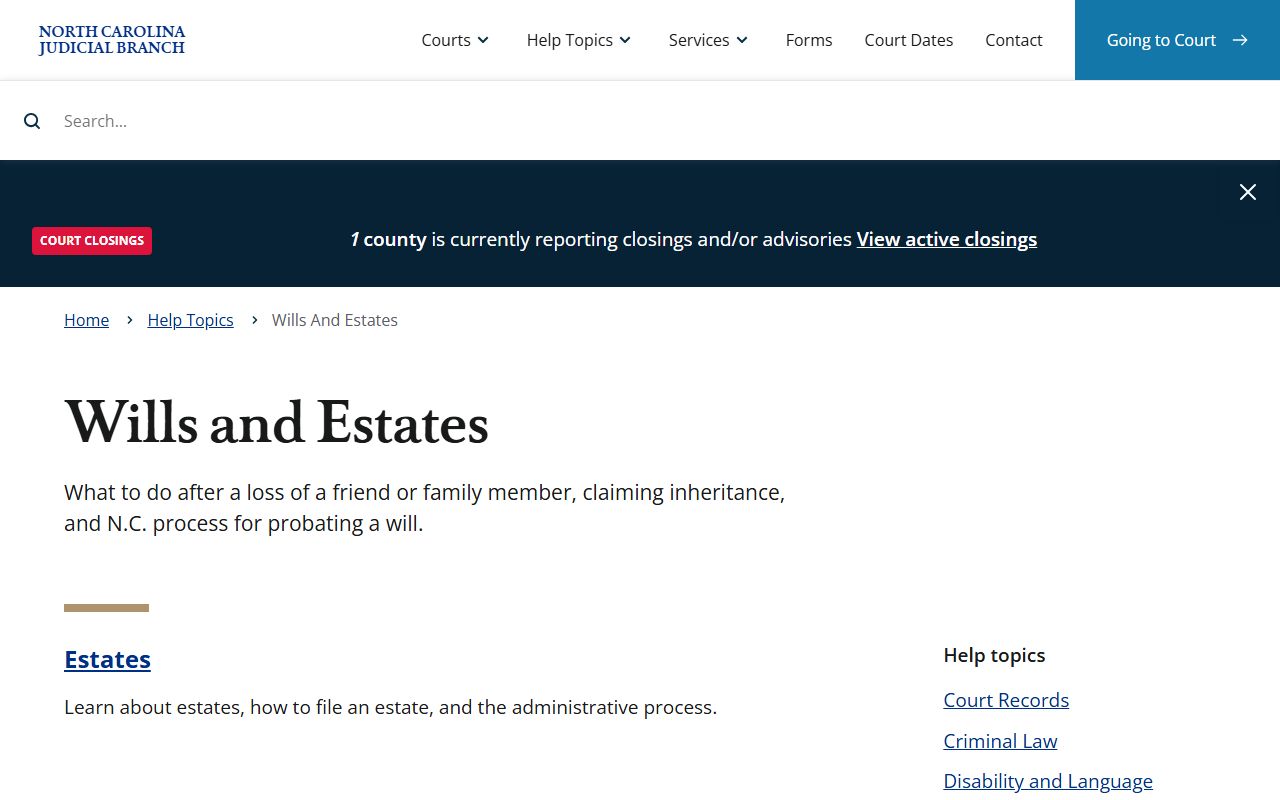
The page explains estate procedures and the role of the Clerk as judge of probate.
What Wake County Probate Records Cover
Probate is broader than just wills. The Clerk's estate and special proceeding files hold many record types tied to property, family, and capacity. Knowing the category helps you ask for the right file.
- Wills offered for probate and estate administrations.
- Letters testamentary and letters of administration.
- Estate inventories and annual or final accounts.
- Guardianship and incompetency proceedings.
- Foreclosure, partition, and name change special proceedings.
Trust administration and creditor notices also run through the Clerk's office.
Wills and Letters of Authority
When someone dies with a will, the original will is usually filed with the Clerk, who decides whether it is valid for probate. The Clerk then issues letters testamentary to the named executor, which is the legal proof of authority a bank or agency will ask to see. When there is no will, the Clerk appoints an administrator and issues letters of administration instead. Either way, the letters are the document that lets a representative act for the estate.
A will can also be contested. A caveat, or will contest, challenges whether the document is the true last will. Renunciations and waivers can change who serves as the representative. These filings all become part of the public estate file unless a confidentiality rule applies.
Probate Terms Defined
Estate paperwork is full of legal words that have precise meanings. A short glossary clears up the most common ones before you read a file.
- Testator
- A person who makes a will and whose estate is probated after death.
- Executor
- The person named in a will to carry out the estate.
- Administrator
- The person the Clerk appoints when there is no will or no named executor.
- Intestate
- Dying without a valid will, which sends the estate through state succession rules.
- Guardianship
- A clerk-ordered arrangement to manage the person or affairs of someone who cannot.
- Conservator
- A person appointed to manage the property of someone who cannot manage it alone.
How Probate Works in Wake County
An estate moves through a set order. The exact path depends on whether there is a will and how large the estate is. Small estates may use a simpler collection-by-affidavit or summary process, while larger estates need full administration. Court officials cannot give legal advice, so use the help topics or a lawyer for strategy.
- Contact the Estates division or review the wills and estates help topic.
- Determine whether there is a will and file the original if required.
- Choose the correct procedure: full administration, small estate, or summary.
- File the application with the death certificate, will, and any bond information.
- The Clerk issues letters if the applicant qualifies.
- Inventory assets, pay claims and costs, and file required accounts.
- The Clerk reviews the accounts and closes the estate when complete.
Guardianship and Incompetency
Guardianship and incompetency matters are special proceedings before the Clerk. They decide whether a person can manage their own affairs and, if not, who will help. Because these cases involve medical and capacity information, public access can be limited. The exact level of access depends on the statute, any court order, and the type of filing. The Judicial Branch guardianship help topic explains the process and the roles involved.
The Judicial Branch guardianship help topic covers how these cases work.
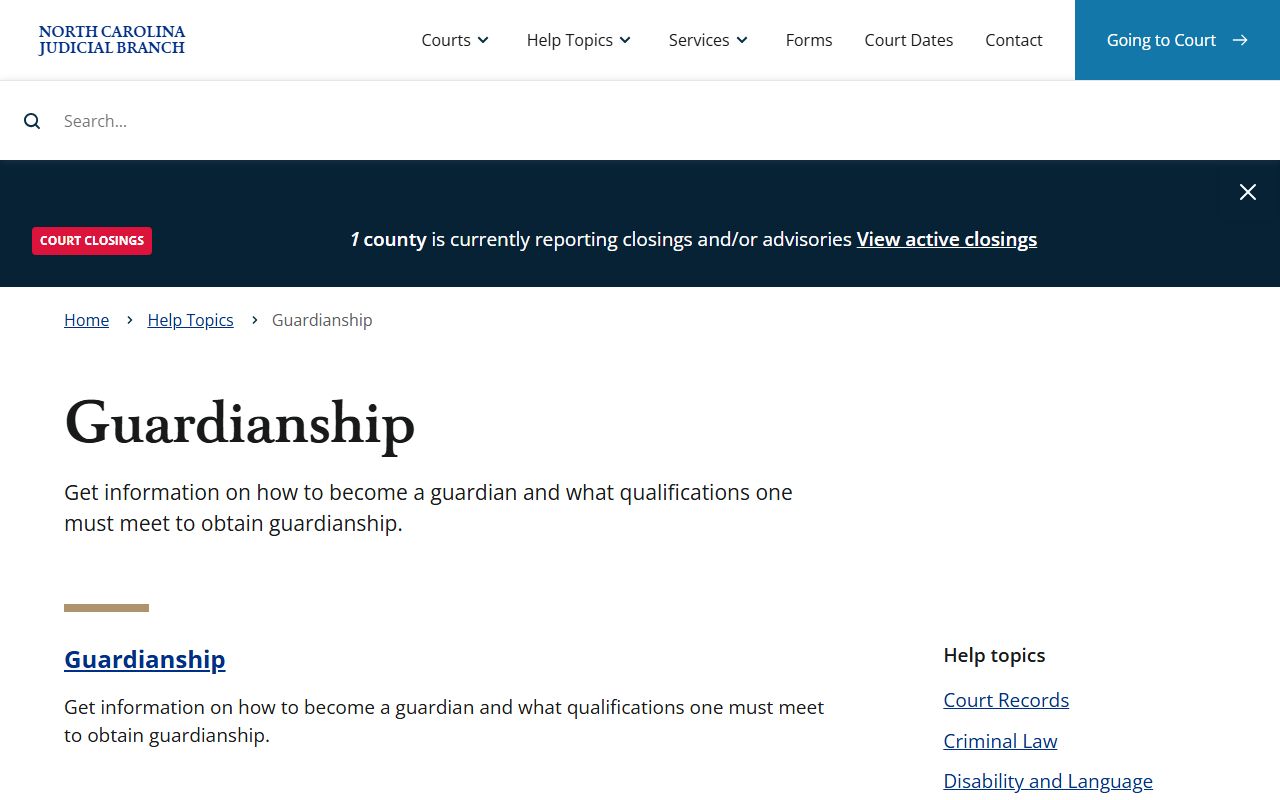
Guardianship cases protect people who cannot manage their own affairs.
Adoption Confidentiality
Adoption is handled through the Clerk's special proceedings, but adoption records are confidential under North Carolina law. Do not expect adoption files to appear in ordinary public search results. Access normally requires statutory authorization or a court order. General process information may be public, but the confidential file is not.
Adoption-record confidentiality is set by N.C.G.S. § 48-9-102.
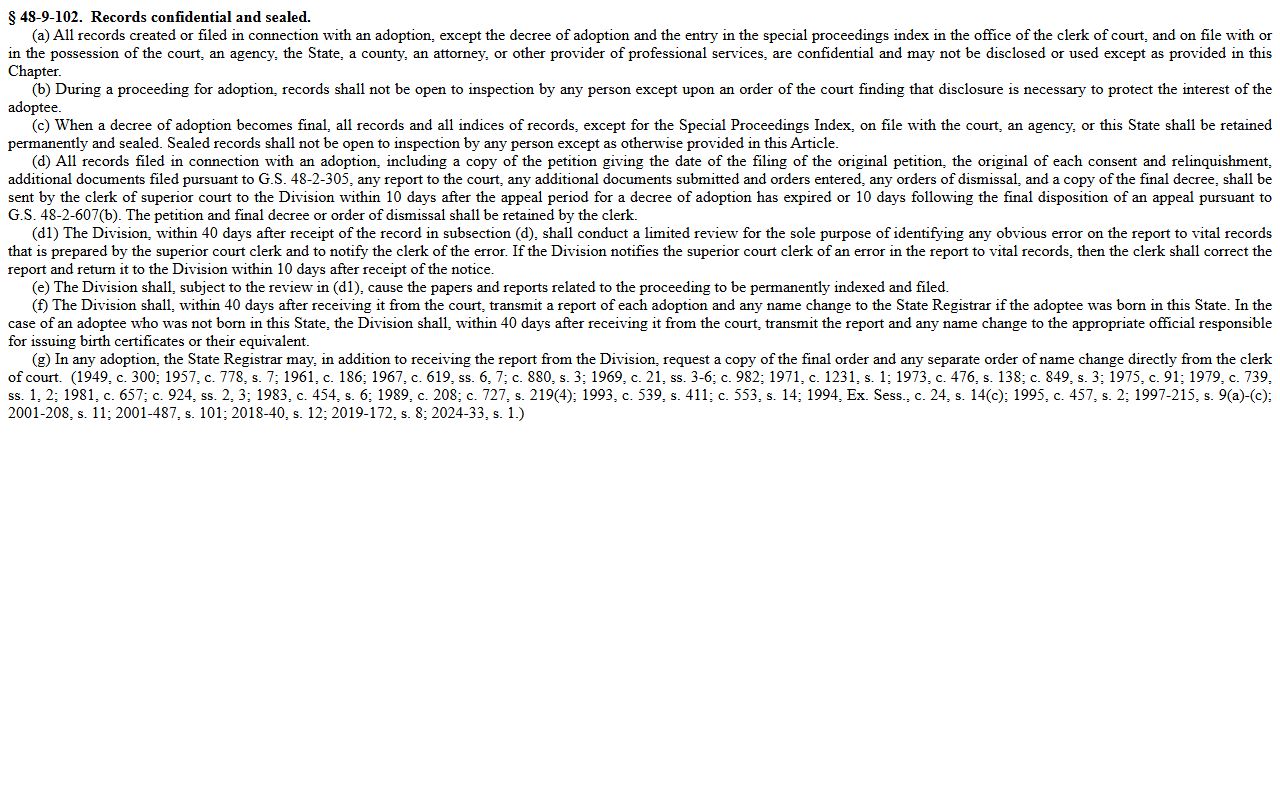
The statute keeps adoption files closed to the general public.
Wake County Probate and Estate Fees
Estate costs in North Carolina are governed by statute and depend on the estate's value and the type of proceeding. The exact current schedule was not posted in the pages reviewed, so confirm totals with the Estates division or the current AOC fee chart. The table below frames the cost categories.
| Item | Amount |
|---|---|
| Estate administration costs | Per N.C.G.S. § 7A-307, based on estate value |
| Special proceeding costs | Per N.C.G.S. § 7A-308 and the AOC schedule |
| Certified copies | Clerk copy fee |
| Portal case search | No cost |
Estate fees are set by N.C.G.S. § 7A-307.
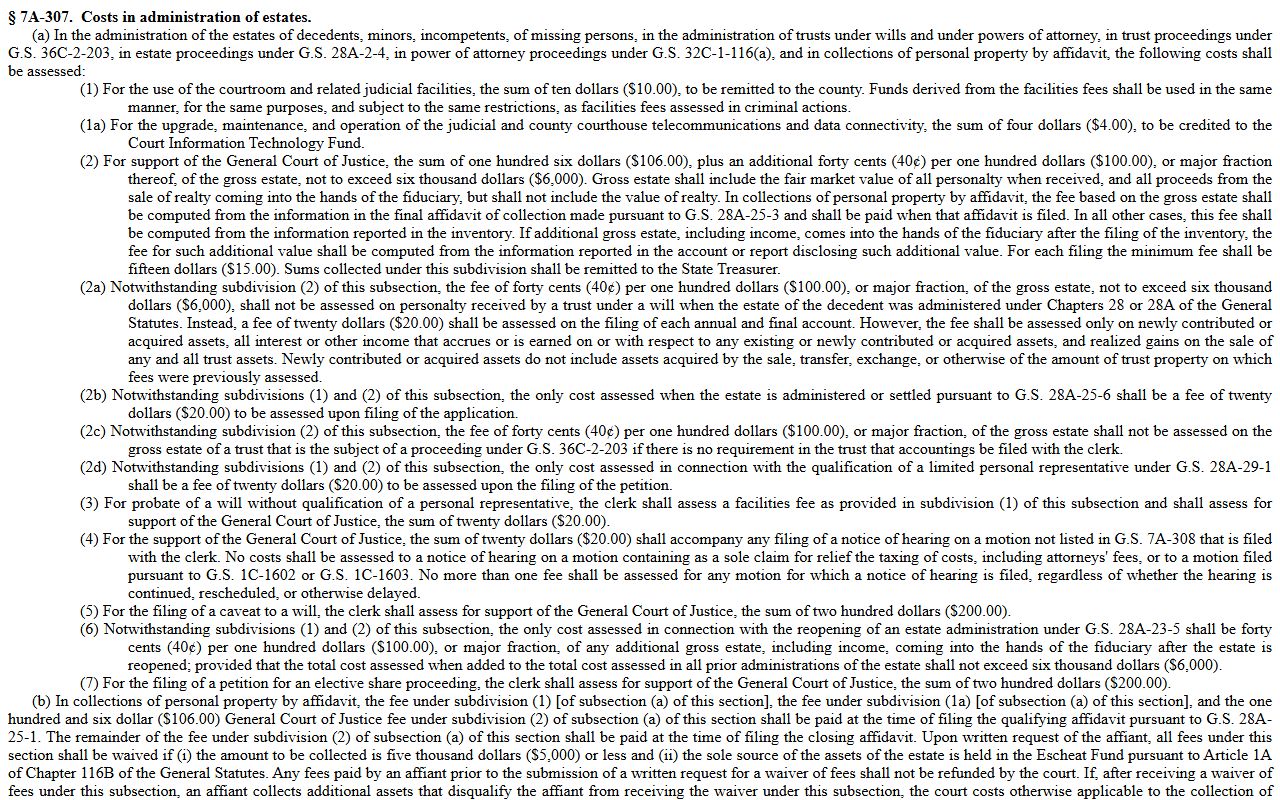
The statute ties estate fees to the value and type of the proceeding.
When an Estate Must Be Opened
Not every death needs a full estate. The right procedure depends on what the person owned and how it was titled. A small estate may qualify for collection by affidavit or a summary process, which is faster and cheaper. A larger estate with property in the deceased person's sole name usually needs full administration so the Clerk can oversee creditors and accounting. A year's allowance can also come into play for a surviving spouse or children.
The personal representative carries real duties once letters are issued. They give notice to creditors, inventory the assets, pay valid claims, costs, and taxes, and file the required accounts with the Clerk. The Clerk reviews those accounts and will not close the estate until the administration is complete. Missing a deadline can slow the whole case.
Searching Wake County Probate Records
Estate and special proceeding case information may be available through the eCourts Portal Smart Search. Confidential categories, sealed filings, adoption records, and protected identifiers will not appear. For certified copies and full file access, contact the Clerk. The fields below are the common ones for a probate search.
| Field Label | Type | Required | Notes / Format |
|---|---|---|---|
| Name | Text | No | Decedent, party, petitioner, or attorney. |
| Case Number | Text | No | Estate or special proceeding number. |
| County | Dropdown | No | Select Wake County. |
A public estate case commonly shows the case number, decedent name, filing date, estate type, personal representative, status, and key events.
Because names drive most probate searches, try variations on the decedent's name, including middle names and maiden names. For older estates that predate the statewide eCourts system, the file may need to be requested from the Clerk rather than pulled online. The Clerk can confirm whether a record exists and how to get a certified copy.
Note: Confidential matters, including adoption and sealed filings, will not appear in public probate search results.
Estates, Land, and Special Proceedings
Some probate matters touch real property. Foreclosures and partitions are special proceedings before the Clerk, and estates often include land that must be identified and sometimes sold. For the recorded land side, the Register of Deeds keeps deeds, maps, and recorded instruments, which are separate from the court file. The county's land-records portals are the place to confirm ownership and recorded documents tied to an estate.
The Wake Register of Deeds records search covers recorded land documents.
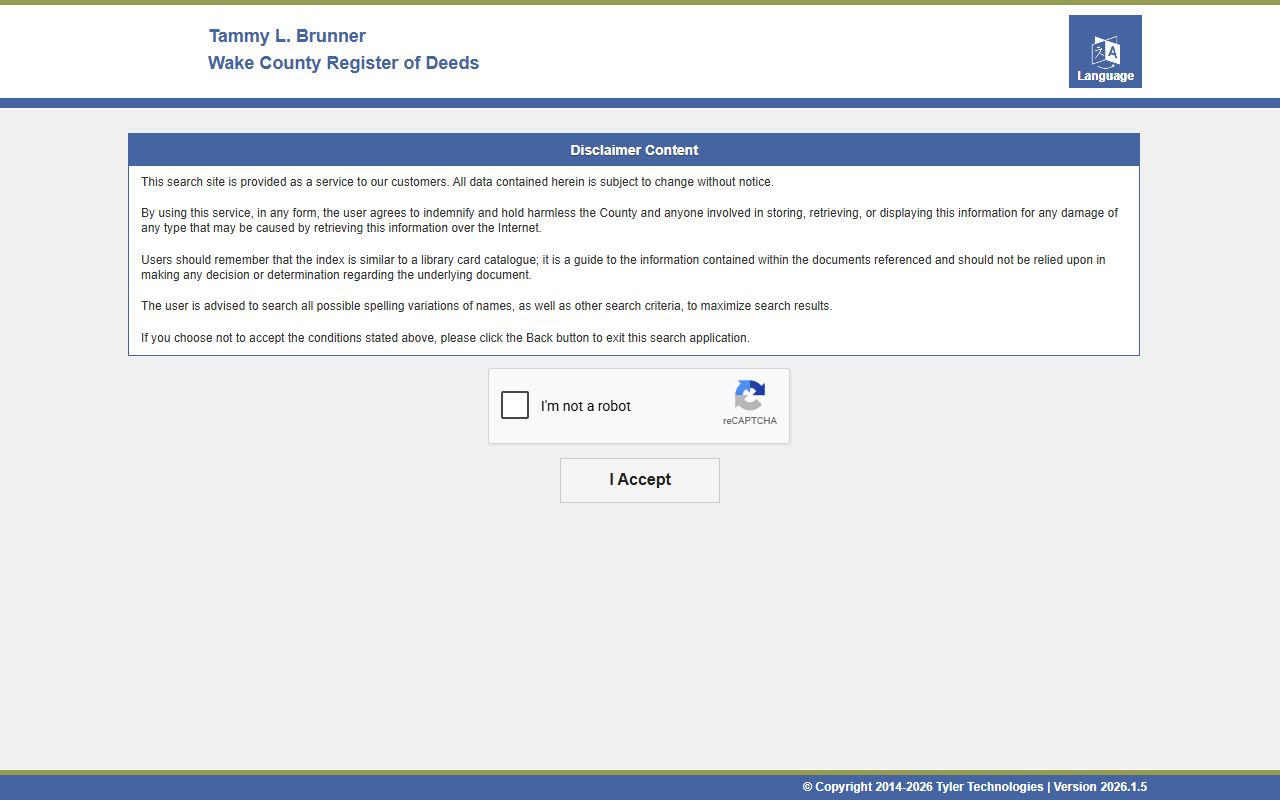
This is the current land-records application for deeds and recorded instruments.
Older documents live in the legacy CRPI search for records through April 2025.
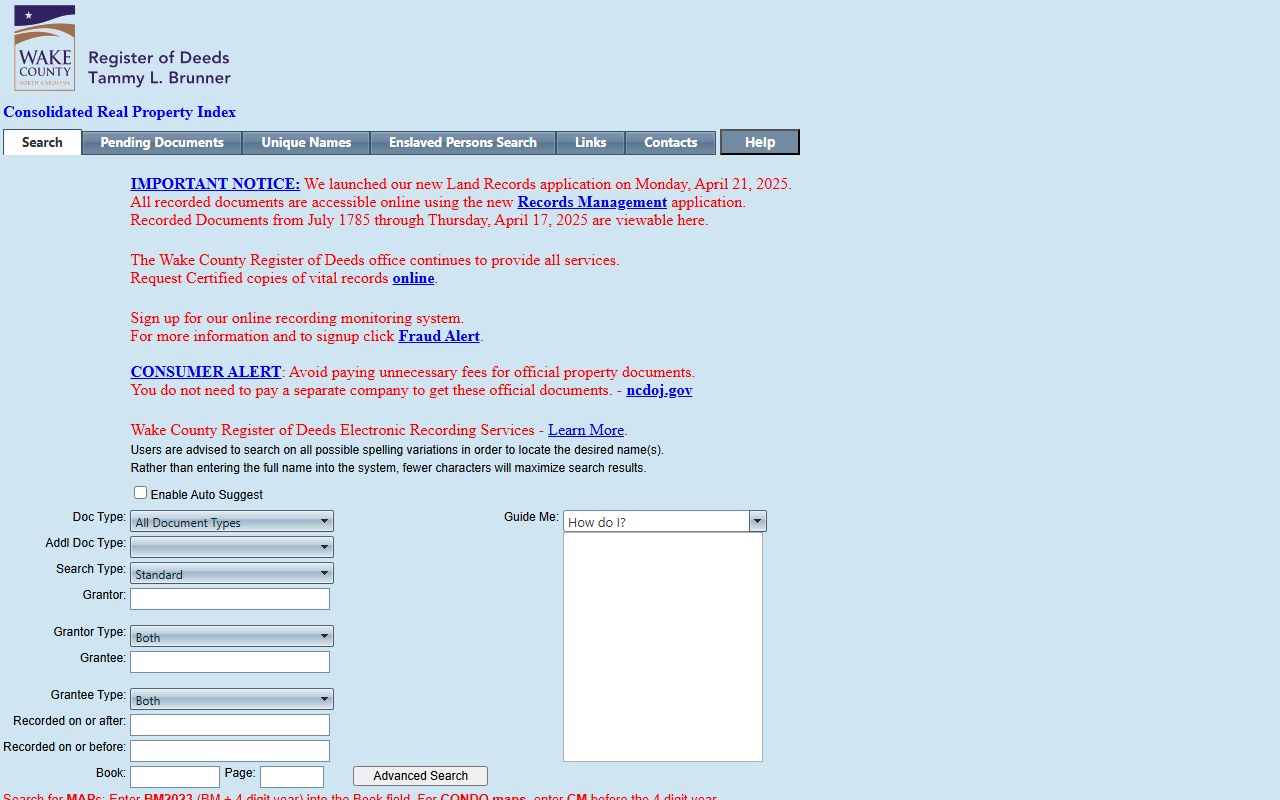
CRPI holds recorded documents from 1785 through April 17, 2025.
A land record may relate to an estate, a foreclosure, or a judgment, but the database and the custodian are different from the court file. Keep the two straight when you research property tied to a probate matter.
Contact the Wake County Estates Office
Probate questions split between two clerk groups. Estates handles wills and estate administration. Special proceedings handles adoption, guardianship, foreclosure, and name changes. Both work from the downtown courthouse.
Estates Division
Wake County Courthouse
316 Fayetteville St. Mall
Raleigh, NC 27601
(919) 792-4450
Special Proceedings
Adoption, guardianship, foreclosure, name changes
Wake County Courthouse
Raleigh, NC 27601
(919) 792-4600