
Wake County Trial Courts at a Glance
North Carolina runs one statewide court system with three divisions: the Appellate Division, the Superior Court Division, and the District Court Division. There are no separate county-built trial courts here. Wake County sits in Superior Court District 10 and District Court District 10. The two trial divisions split the work by seriousness and case type, and both operate from the downtown Raleigh court buildings.
The Judicial Branch structure-of-the-courts page lays out the whole system.
The official structure of the courts page explains the three divisions.
The page shows how appellate, Superior, and District courts fit together statewide.
Wake's place in this system is fixed by district. The county is Prosecutorial District 10, Superior Court District 10, and District Court District 10. Since the county joined the statewide eCourts system in February 2023 as a pilot county, both trial divisions run on the same Odyssey case management platform now used across all 100 counties. That is why a Wake case search and a search in another county look and behave the same way.
Superior Court Jurisdiction
Superior Court is North Carolina's higher trial division and its oldest court, established in 1777. It hears felony criminal cases, civil cases involving more than $25,000, and appeals from District Court for a new trial. Criminal jury trials seat 12 citizens. Judges rotate every six months among districts within their division to reduce conflicts from permanent assignment, and each administrative district has a senior resident superior court judge. The Business Court is a specialized Superior Court forum for complex commercial cases.
The Judicial Branch Superior Court page details its jurisdiction.
Superior Court hears felonies, larger civil cases, and District Court appeals.
District Court Jurisdiction
District Court handles the bulk of the everyday docket. It hears misdemeanors and infractions without a jury, civil cases under $25,000, and family matters like divorce, child custody, and child support. Its juvenile jurisdiction covers delinquency, undisciplined juveniles, abuse, neglect, and dependency. District courts sit in county seats and certain other authorized places. For most residents, a court matter starts in District Court.
The Judicial Branch District Court page sets out its jurisdiction.
District Court covers misdemeanors, family law, juvenile cases, and smaller civil claims.
Magistrates and Small Claims
Magistrates are District Court judicial officers with their own authority. In civil matters, they try small claims up to $10,000, landlord eviction cases, suits to recover personal property, and motor vehicle mechanics' liens. In criminal matters, they issue arrest warrants, set bail, accept guilty pleas for minor offenses, and take certain worthless-check waivers. The magistrate is often the first judicial officer a person sees after an arrest in Wake County. After arrest, the magistrate reviews the charge, sets conditions of release, and the case then moves onto a District Court or Superior Court calendar depending on the offense. That early step is why the magistrate's decisions show up in both the jail record and the court file.
Superior Court Versus District Court Versus Magistrate
The three levels divide the work, and knowing the split tells you where a case belongs. The table compares them on the points that matter most to a records searcher.
| Point | Magistrate | District Court | Superior Court |
|---|---|---|---|
| Civil reach | Small claims to $10,000 | Under $25,000, family | Over $25,000 |
| Criminal reach | Warrants, bail, minor pleas | Misdemeanors, infractions | Felonies |
| Jury | No jury | No jury | 12-member jury |
| Appeal goes to | District Court | Superior Court | Court of Appeals |
A small claims case lost before a magistrate can be appealed for a new trial in District Court.
Wake County Court Offices
The Wake court offices cluster in downtown Raleigh, split mainly between the Courthouse for civil matters and the Justice Center for criminal matters and marriages. The table lists the main offices, their role, and the published phone line for each.
| Office | Role | Location | Phone |
|---|---|---|---|
| Wake County Courthouse | Civil matters except marriages | 316 Fayetteville St. Mall | (919) 792-4000 |
| Wake County Justice Center | Criminal matters and marriages | 300 S. Salisbury St. | (919) 792-4000 |
| Superior Court Judges | Felonies, civil over $25,000 | Justice Center / Courthouse | (919) 792-4950 |
| District Court Judges | Misdemeanors, family, juvenile | Justice Center / Courthouse | (919) 792-4800 |
| Magistrates | Warrants, bail, small claims | Wake County Justice Center | (919) 792-4900 |
| District Attorney | State prosecutions | Wake County Justice Center | (919) 792-5000 |
The Judicial Branch court officials page explains the roles of clerks, judges, magistrates, and district attorneys.
The page describes how each court official fits into the trial court system.
How a Case Moves Through the System
Cases generally move up the system in a set path. A matter starts at the magistrate or District Court level, can rise to Superior Court, and then to the appellate courts. The flow below shows the route.
Case flow: Magistrate / District Court › Superior Court › North Carolina Court of Appeals › Supreme Court of North Carolina
Not every case travels the whole path. Most end at the trial level through a plea, judgment, or settlement, and only some are appealed.
Family and Juvenile Court
District Court hears family and juvenile matters, and Wake runs a Family Court Administration to move divorce, custody, support, and equitable distribution cases more consistently. The Trial Court Administrator helps manage local court dates, calendars, mediation, and arbitration, and links language access and disability accommodation services. Juvenile delinquency and undisciplined adjudications are confidential and not open to the public.
The Wake Trial Court Administrator's office handles local court administration.
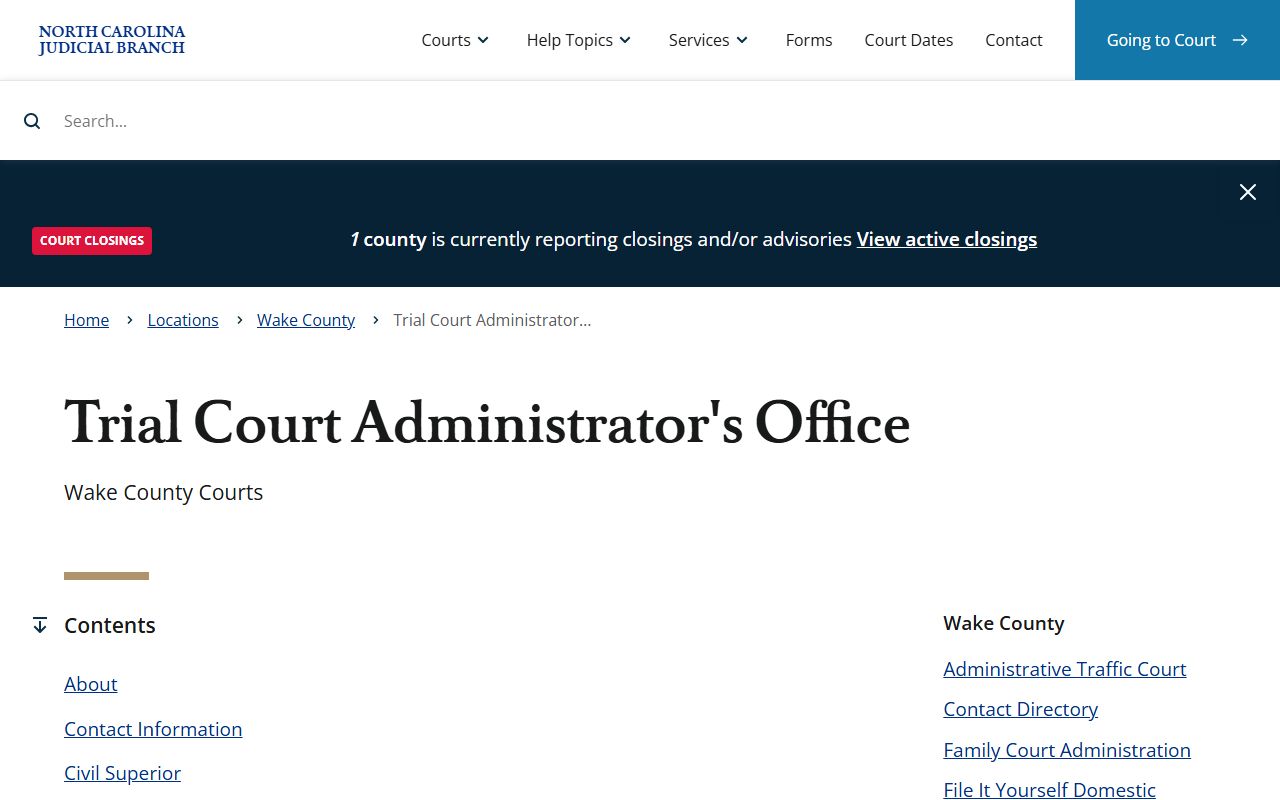
The office coordinates calendars, mediation, arbitration, and access services.
Specialty Courts and Programs
Wake County runs several problem-solving and dispute-resolution programs alongside the regular dockets. The Adult Treatment Court supervises eligible defendants with substance use or behavioral health needs through a recovery model. Court-Ordered Arbitration offers a quick, lower-cost alternative to a full trial for some civil cases, and it can produce arbitration awards and trial de novo requests on the docket.
On the family side, the county lists the Child Custody and Visitation Mediation Program, the Family Financial Settlement Program, and the Access and Visitation Program. The District Criminal Court Mediation Program can resolve some lower-level criminal disputes. These programs aim to cut contested hearings and help people reach workable outcomes, and they feed the same court files the public can search.
Administrative Traffic Court
Traffic infractions and minor offenses run through Wake's Administrative Traffic Court in courtroom 101 at the Justice Center. It is not a trial court, and the officer who wrote the citation does not appear there. To contest a citation, you appear to schedule a future trial. For the full process, see the Wake County traffic court records page.
Federal Courts Serving Wake County
Some Wake matters belong in federal court, not the state trial courts. Wake County is in the U.S. District Court for the Eastern District of North Carolina, which has a federal courthouse in Raleigh. Federal cases cover federal crimes, constitutional and federal statutory claims, and diversity matters, and they are searched through PACER rather than the state Portal.
The U.S. District Court for the Eastern District of North Carolina is the federal trial court for Wake.
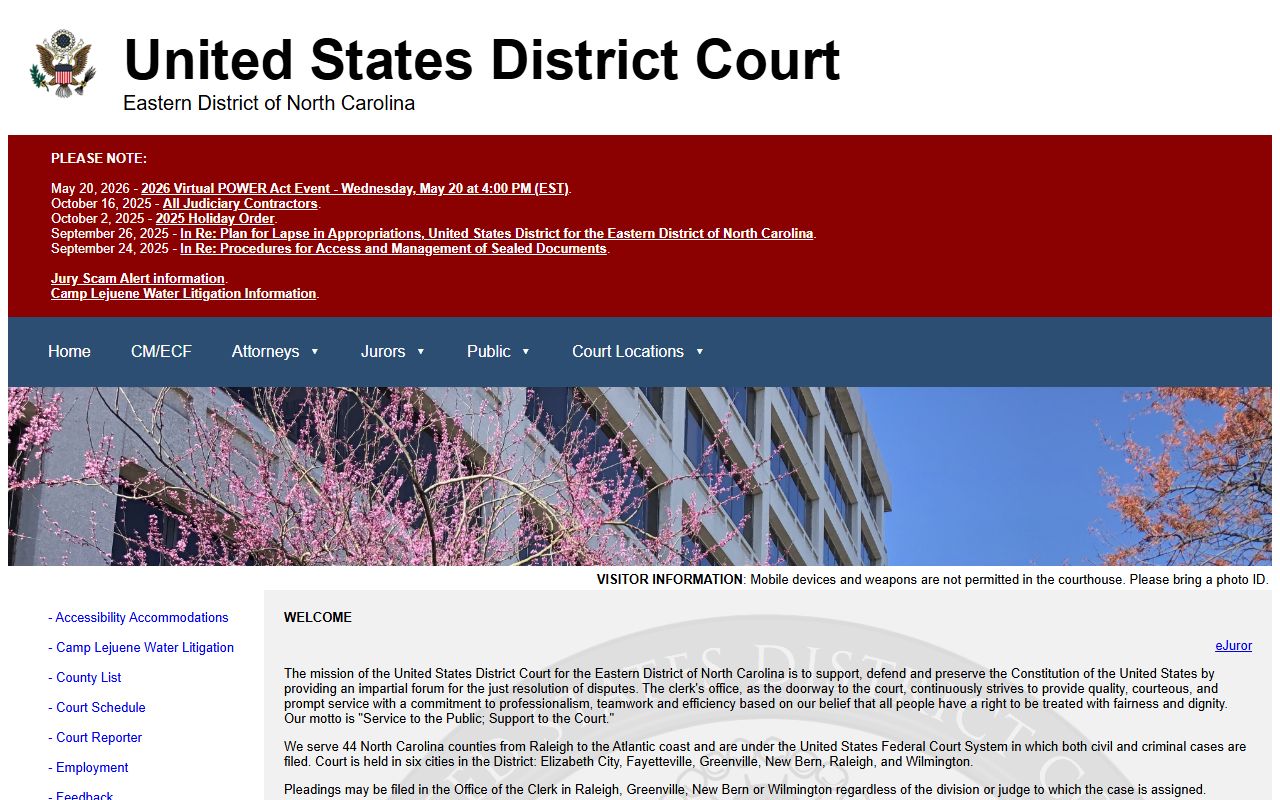
The EDNC district court hears federal civil and criminal cases from the Raleigh area.
Federal bankruptcy is handled by the U.S. Bankruptcy Court for the Eastern District of North Carolina.
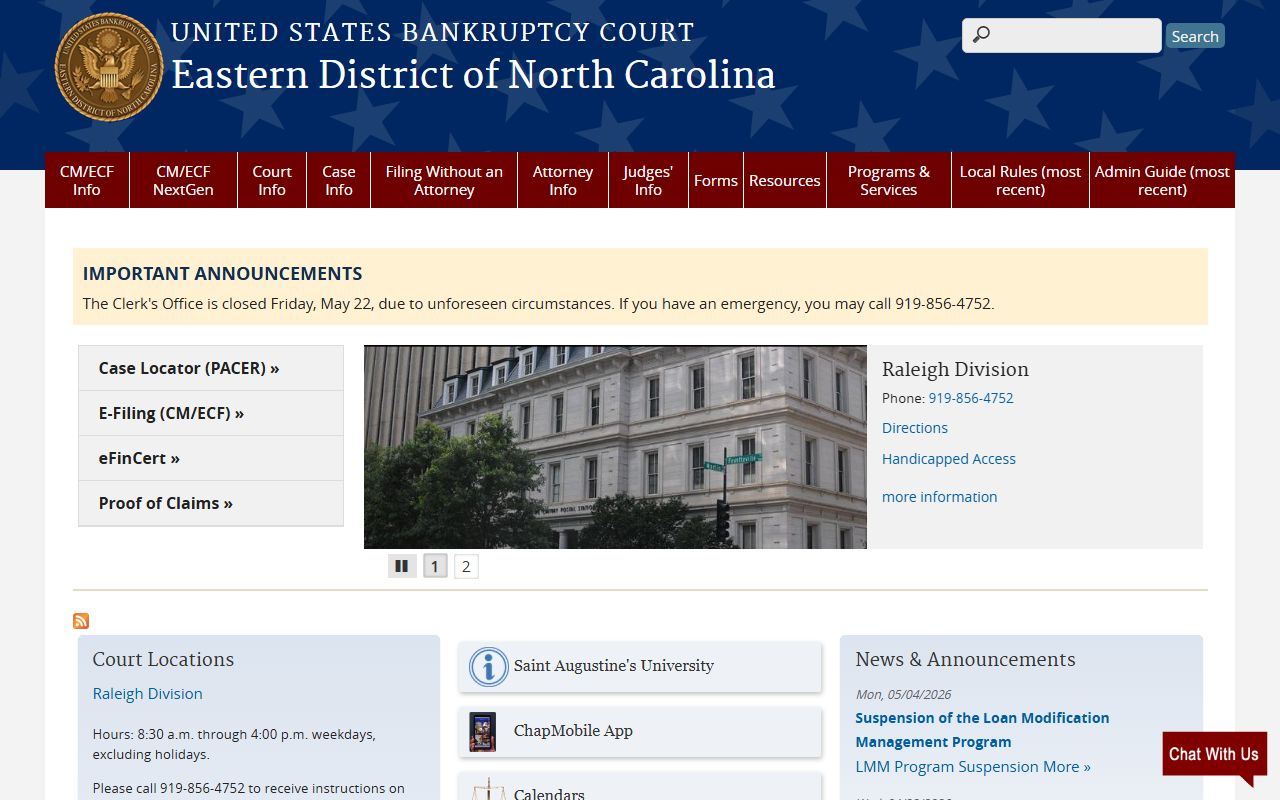
Bankruptcy cases are separate from Wake civil debt cases and proceed in federal court.
Federal dockets and documents are searched through PACER.
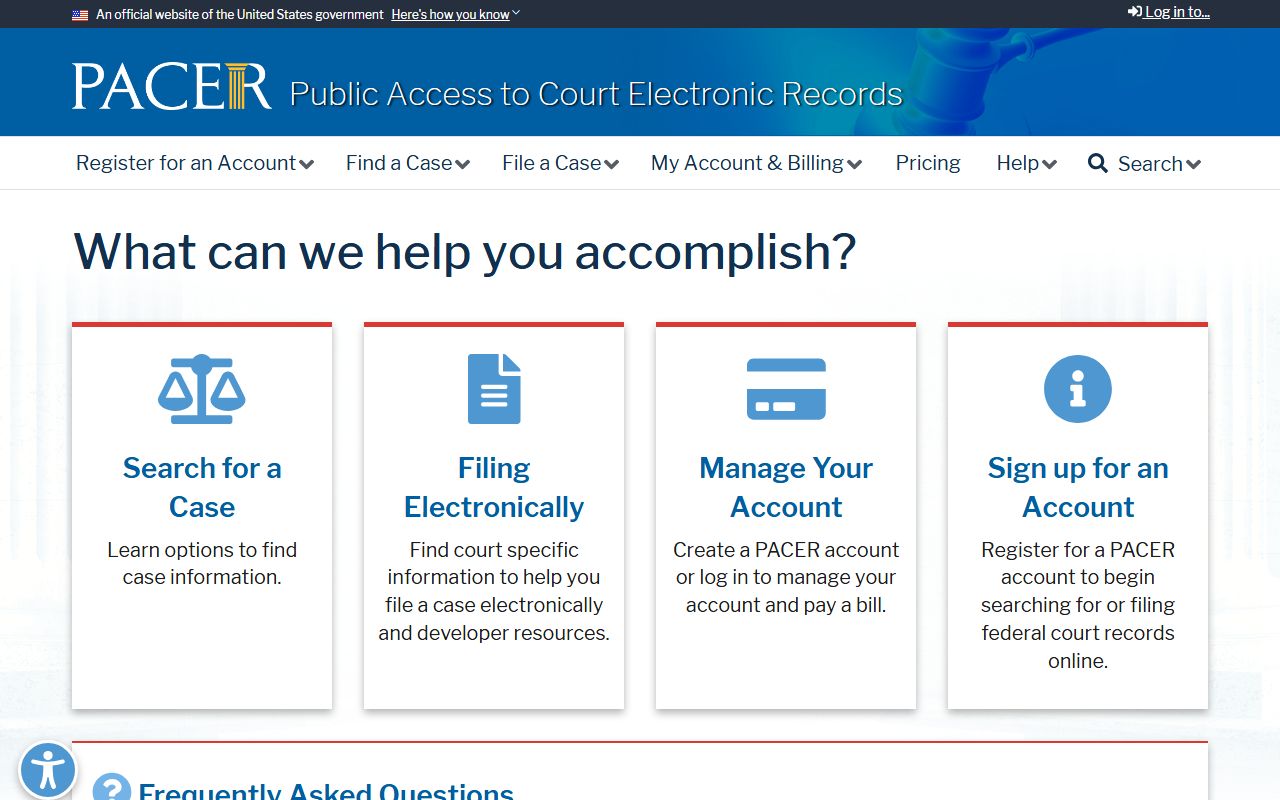
PACER provides federal district, bankruptcy, and appellate case access.
Appeals from EDNC go to the U.S. Court of Appeals for the Fourth Circuit.
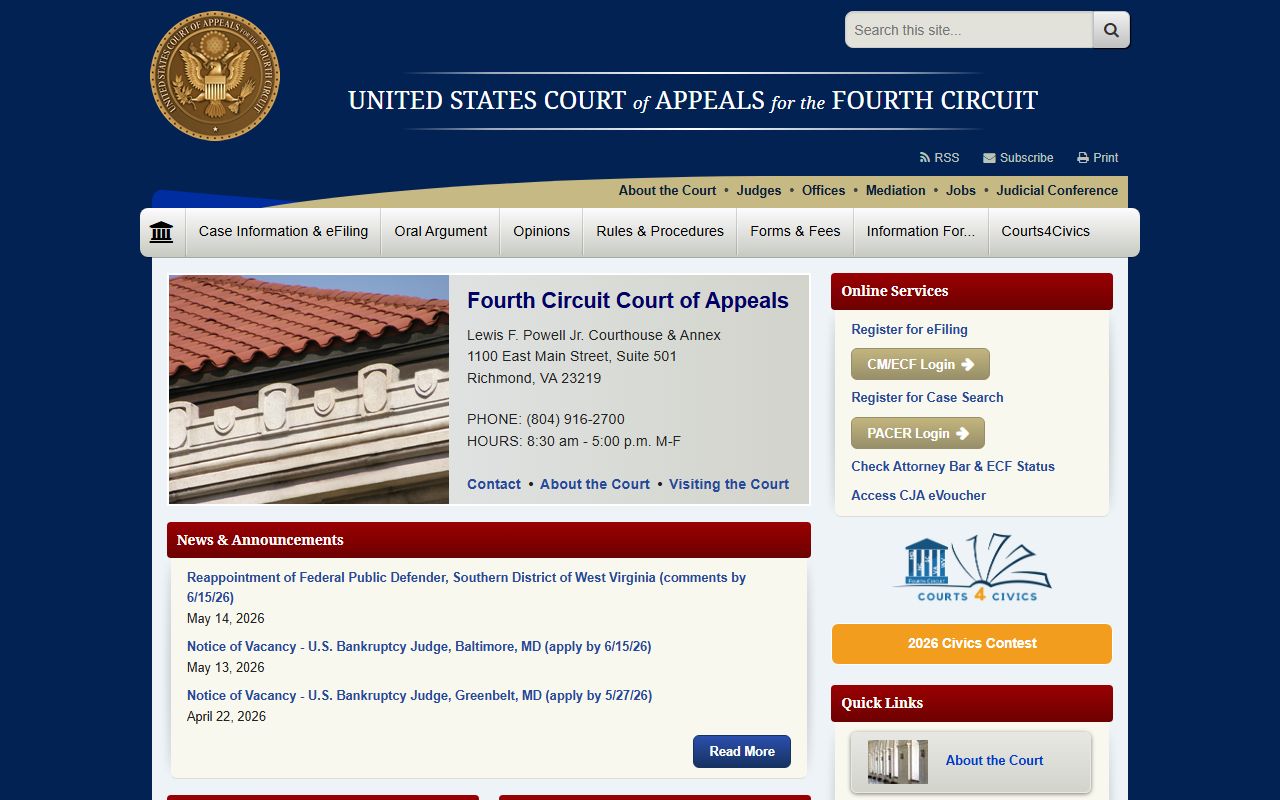
The Fourth Circuit hears appeals from the Eastern District of North Carolina.
The U.S. Attorney for the Eastern District of North Carolina prosecutes federal cases in the district.
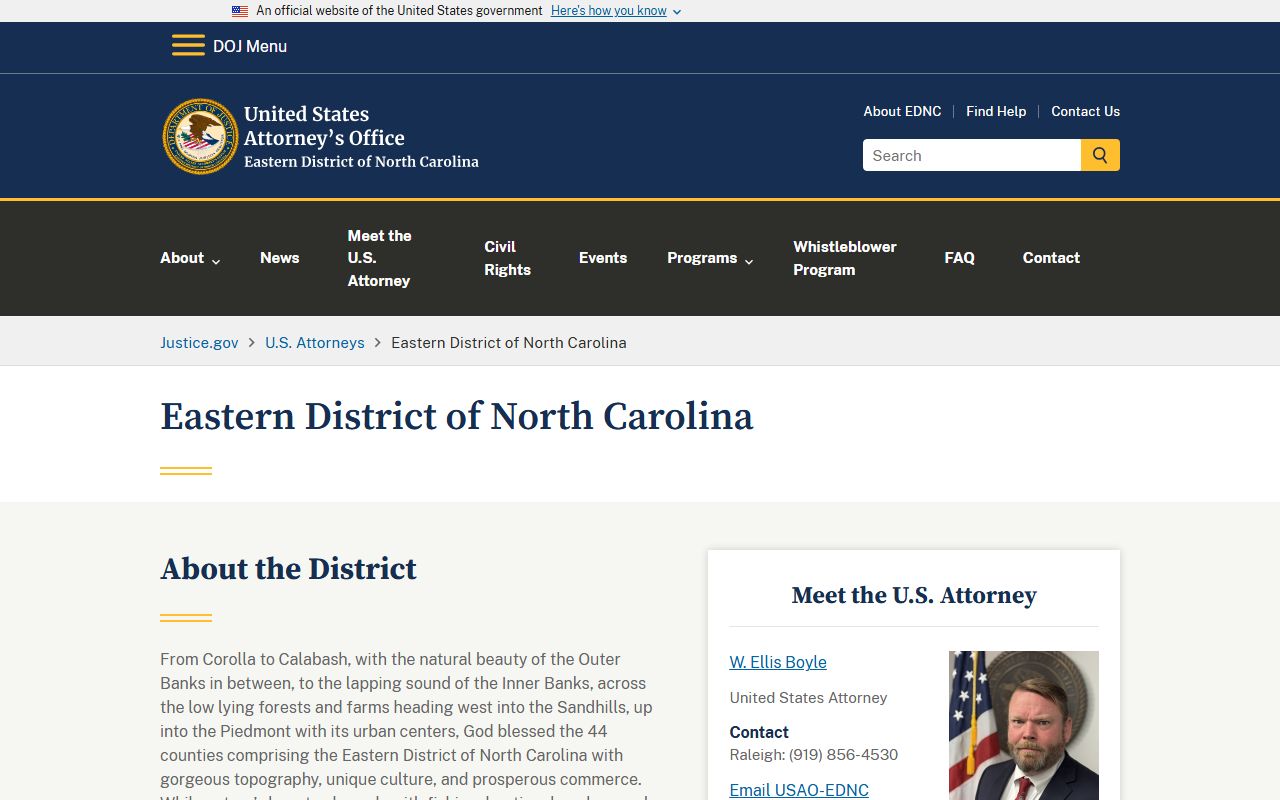
The office represents the United States across the 44 eastern counties, including Raleigh.
The U.S. Marshals page lists the Raleigh federal courthouse location.
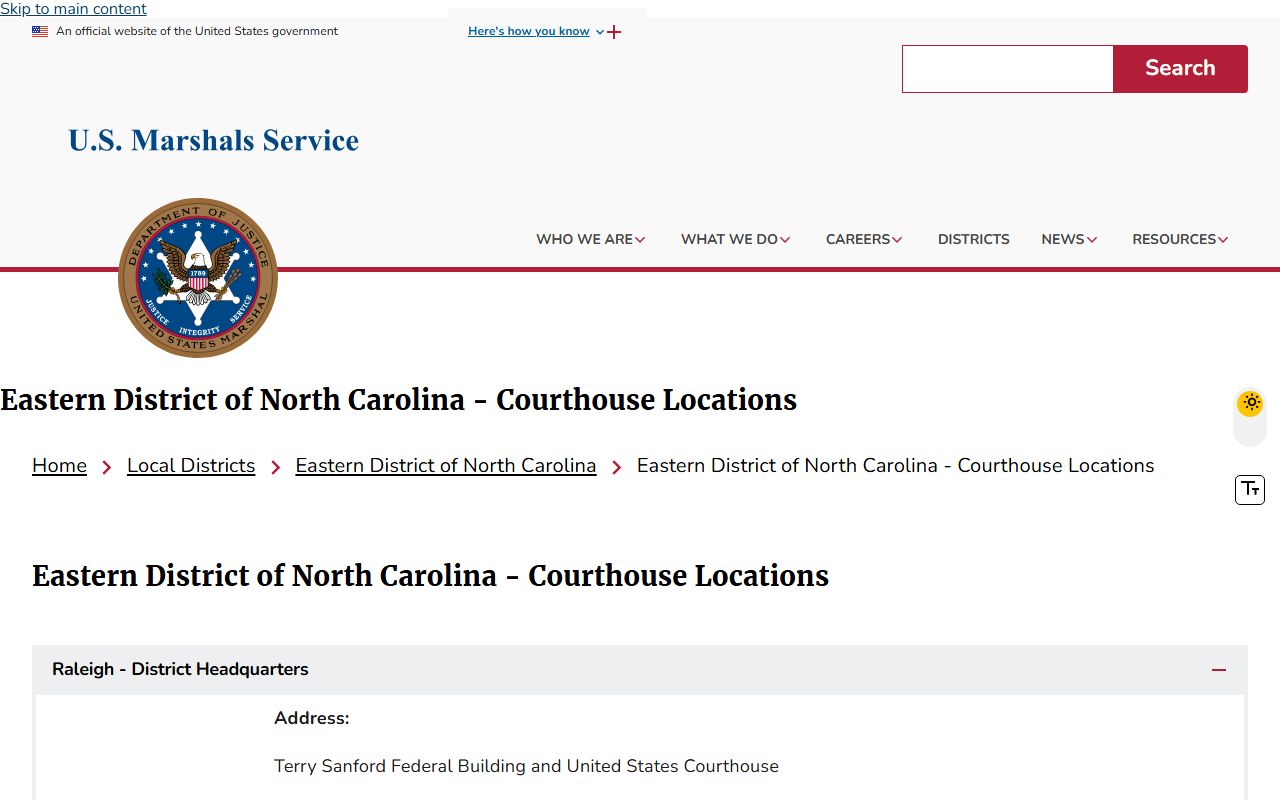
The Terry Sanford Federal Building and U.S. Courthouse sits on New Bern Avenue in Raleigh.
The Raleigh federal courthouse is at 310 New Bern Avenue, Suite 100, with public hours of 8:30 a.m. to 5:00 p.m. Federal criminal matters can include drug, firearms, immigration, fraud, civil rights, and public corruption cases, while federal civil matters include constitutional and federal statutory claims. The federal filing system for attorneys and parties is CM/ECF, which connects to PACER for public case access. Keep the federal track separate from the state Portal, since the two systems do not share records.
Appeals From Wake Trial Courts
Appeals from Wake trial courts go to the North Carolina Court of Appeals, unless a statute or rule sends a matter directly to the Supreme Court of North Carolina. A District Court criminal conviction can be appealed for a new trial in Superior Court, while Superior Court decisions head to the appellate courts. Federal appeals follow a separate track to the Fourth Circuit.